
Darjeeling Tour & Travel Guide – Packages, Places, Tips & Itinerary | Greenhills Tour
There are destinations you visit once and forget. And then there is Darjeeling — a name that stays with you long after you have come back, long after the mountain cold has left your bones, long after the last cup of tea has gone cold on your table. Perched at an altitude of approximately 2,050 metres (6,710 feet) above sea level in the lower Himalayas of West Bengal, Darjeeling is not simply a hill station. It is a living, breathing experience — layered with colonial history, Buddhist silence, the world’s finest tea, a UNESCO-listed railway that still breathes steam, and mountain views that can genuinely make you stop mid-sentence.
Every year, hundreds of thousands of travellers arrive here from Kolkata, from across India, and from every corner of the world. Some come for the famous Darjeeling tour package. Some arrive with their partners on a Darjeeling honeymoon package. Others lace up their boots for the Singalila ridge trek or the Sandakphu trail. But almost all of them leave with the same feeling — that Darjeeling gave them more than they expected, in every possible direction.
This destination page has been built to answer every real question a traveller carries when planning a Darjeeling trip — from how to reach Darjeeling from Kolkata, to what the toy train experience is actually like in 2025, to how much a Darjeeling trip costs for two persons, to where you can stand and watch the sun paint Kanchenjunga in shades that no photograph ever does justice. Everything is here. Take your time.
What Is Darjeeling Famous For? The Identity of India’s Most Beloved Hill Station
Ask ten different travellers what Darjeeling is famous for and you will get ten different answers. That variety itself tells you something important about the place. The short answer is: Darjeeling is famous for its tea, its toy train, its sunrise view from Tiger Hill, its Himalayan scenery, and its extraordinary cultural layering of Nepali, Tibetan, Bengali, and British colonial influences all compressed into one compact hill town. But each of those things deserves far more than a line.
Darjeeling Tea — The Champagne of Teas
No conversation about Darjeeling begins anywhere except here. Darjeeling tea is arguably the most recognised and respected tea in the world. It carries a Geographical Indication (GI) tag, meaning that only tea grown in the specific Darjeeling district can legally be called Darjeeling tea. The steep slopes, the altitude, the mist, the specific soil composition of the Himalayan foothills, and the unique cultivar called China Jat all combine to produce something that orthodox tea producers elsewhere simply cannot replicate.
The tea world speaks of Darjeeling’s first flush and second flush with the same reverence that wine enthusiasts apply to Bordeaux vintages. The first flush, harvested between late February and April, produces a delicate, light, floral cup with a greenish tinge that has earned it the nickname the “champagne of teas.” The second flush, harvested in May and June, produces a fuller, more muscatel character — that distinctive grape-like note that defines premium Darjeeling black tea globally.
There are currently around 87 operational tea gardens spread across the Darjeeling district. Visiting one — or several — is not a tourist activity that feels forced. It is one of the most genuinely rewarding things you can do here. Happy Valley Tea Estate, just 3 kilometres from the town centre, is the most accessible and offers guided tours through the plucking, withering, rolling, and drying processes. Makaibari Tea Estate, one of the oldest and most heritage-rich estates in Darjeeling, is a name that comes up repeatedly among serious tea travellers. Both offer an intimate look at how the world’s finest tea actually comes to be.
The Darjeeling Himalayan Railway — A UNESCO World Heritage on Iron Rails
The Darjeeling Himalayan Railway, affectionately called the toy train, is not a novelty attraction. It is a legitimate piece of world heritage. Inscribed on the UNESCO World Heritage List in 1999, the DHR was built between 1879 and 1881 as a remarkable feat of mountain engineering. The narrow-gauge railway runs 88 kilometres from New Jalpaiguri (NJP) at the plains to Darjeeling town, climbing from an elevation of roughly 114 metres to over 2,200 metres through a series of loops, spirals, and switchbacks that were considered engineering marvels in their day.
The Batasia Loop — where the train performs a full 360-degree spiral to gain elevation — is perhaps the single most photographed moment on the entire journey. The Ghoom Loop, the Z-reverse switchbacks, and the gentle passage through forests and tea gardens all contribute to a journey that feels genuinely unlike any other train ride in the world. In 2025, the toy train continues to operate both the full NJP to Darjeeling service and the shorter, very popular joyride between Darjeeling and Ghoom, which is the perfect option for those who want the experience without the half-day commitment.
Tiger Hill Sunrise — A View That People Travel Across the World For
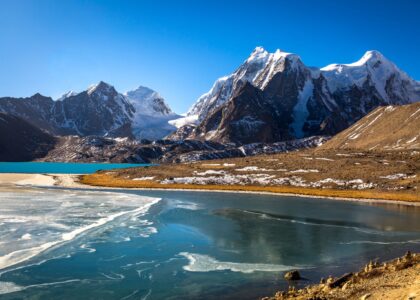
The sunrise from Tiger Hill at an elevation of 2,590 metres is, quite simply, one of the most celebrated natural spectacles in all of South Asia. On clear mornings, the view stretches across multiple Himalayan giants — Kanchenjunga (the world’s third highest peak), Everest (just visible on the horizon on very clear days), Makalu, Lhotse, and the vast sweep of the Himalayan range. The moment when the first light touches Kanchenjunga and turns its snow cap from pale grey to burning gold is the kind of thing that makes even seasoned travellers go quiet.
The viewing experience is offered from both an open observation area and a multilevel glass-enclosed tower structure. Most Darjeeling tour packages include an early morning Tiger Hill excursion, typically departing around 3:30 to 4:00 AM depending on the season. The entry fee is nominal — currently around ₹50 for the open area and ₹100 for the glass-enclosed observation tower — and the experience justifies any amount. Clear mornings are most frequent in October and November, and again in spring.
Kanchenjunga Views Across Darjeeling
Kanchenjunga — at 8,586 metres the world’s third highest mountain — is the constant backdrop of Darjeeling life. Unlike Everest, which requires significant travel into Nepal to see properly, Kanchenjunga is genuinely visible from Darjeeling town itself on clear days. The mountain massif dominates the western horizon. Hotels, guesthouses, and homestays across the town advertise their Kanchenjunga view rooms with good reason — waking up to a clear morning view of that massif from your bed is the kind of thing you remember for the rest of your life.
Colonial Architecture and Gorkhaland Identity
Darjeeling carries its British colonial past with a certain pride. The old planters’ bungalows, the Raj Bhavan, the Victorian-style churches, St. Paul’s School (one of India’s finest colonial-era boarding schools), and the general layout of the town with its Mall Road and Chowrasta square all speak to the hill station’s carefully planned development as a British sanatorium and summer retreat in the 19th century. That colonial identity sits in productive tension with the deeply Nepali and Gorkha cultural character of the population — a tension that has defined Darjeeling’s politics and identity for decades and continues to do so.
20 Fast Facts About Darjeeling Every Traveller Should Know
Before you open a single booking page, here are twenty essential facts about Darjeeling that every serious traveller should carry:
- Altitude: Darjeeling town sits at approximately 2,050 metres (6,710 feet) above sea level. Tiger Hill, the highest commonly visited viewpoint, is at 2,590 metres.
- Location: Darjeeling is in the Darjeeling district of West Bengal, in the lower Himalayan range, sharing borders with Nepal, Bhutan, and Sikkim.
- Distance from Kolkata: Approximately 600–650 kilometres by road. The nearest railway junction is New Jalpaiguri (NJP), about 80 kilometres away.
- UNESCO status: The Darjeeling Himalayan Railway (DHR) has been a UNESCO World Heritage Site since 1999.
- Tea production: Darjeeling district has around 87 tea gardens producing approximately 8–9 million kilograms of tea annually.
- GI tag: Darjeeling tea holds a Geographical Indication (GI) tag — the first Indian product to receive one, in 2004.
- The name: “Darjeeling” is derived from the Tibetan words “Dorje” (thunderbolt, a symbol of Vajrayana Buddhism) and “Ling” (place) — thus “Land of the Thunderbolt.”
- Sandakphu altitude: Sandakphu, the highest peak in West Bengal at 3,636 metres, is accessible via the Singalila ridge trek from Darjeeling.
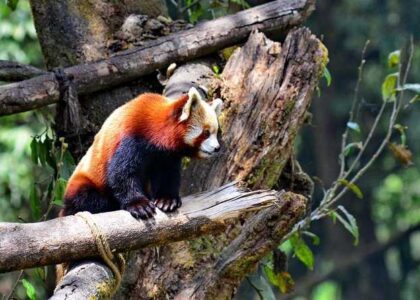
- Red panda: Darjeeling’s Padmaja Naidu Himalayan Zoological Park is one of the best places in India to see the endangered red panda. The zoo operates a successful red panda breeding programme.
- Ghoom Monastery: The Yiga Choeling Monastery in Ghoom, established in 1850, houses a 15-foot-high statue of Maitreya (the future Buddha) and is one of the most important Tibetan Buddhist monasteries in India.
- The toy train: The DHR was built between 1879 and 1881. It runs 88 kilometres from NJP to Darjeeling.
- First flush timing: The coveted first flush Darjeeling tea is plucked between late February and April. The second flush runs May to June.
- Monsoon: June through September is monsoon season — heavy rainfall, landslides, and limited visibility. Not recommended for first-time visitors.
- Best months: October–November and March–May are widely considered the best months to visit Darjeeling for weather and views.
- Singalila National Park: The Singalila National Park, through which the Singalila ridge trek passes, is home to red pandas, Himalayan black bears, and diverse birdlife.
- Tenzing Norgay: Tenzing Norgay, who co-summited Everest with Edmund Hillary in 1953, was a Darjeeling resident. The Himalayan Mountaineering Institute (HMI) in Darjeeling was established partly in his honour.
- Snow: Darjeeling receives snowfall occasionally in winter (December–January), though it is not guaranteed every year. Higher elevations around Sandakphu and Phalut receive more consistent snow.
- Population: The Darjeeling municipality has a population of approximately 120,000–130,000 people.
- Gorkhaland: Darjeeling is the centre of the Gorkhaland movement — a longstanding demand for a separate state for the Nepali-speaking Gorkha community.
- Himalayan Mountaineering Institute: HMI, established in 1954, is one of the premier mountaineering training institutes in Asia. Tenzing Norgay was its first director of field training.
How to Reach Darjeeling: Every Route Explained
Getting to Darjeeling requires a degree of planning that most other hill stations do not — and that planning is itself part of the journey. There is no airport at Darjeeling. There is no direct train to the town itself (if you exclude the toy train, which is a separate experience rather than a practical commuter service). But every route to Darjeeling rewards you before you even arrive.
How to Reach Darjeeling from Kolkata by Train
The most popular and practical route for most Indian travellers is by train to New Jalpaiguri (NJP) followed by road to Darjeeling. Multiple trains operate daily from Kolkata (Howrah and Sealdah stations) to NJP. Journey time is typically 8 to 12 hours depending on the train. Key trains include the Darjeeling Mail (via Howrah), the Padatik Express, the Kanchenjunga Express, and the Saraighat Express. NJP is well-connected and functions as the gateway to the entire Darjeeling Himalayan region including Sikkim.
From NJP, the most convenient and popular onward option is a shared taxi or private vehicle to Darjeeling. Shared taxis (typically Sumo or Bolero vehicles) depart from the NJP taxi stand throughout the morning and cost approximately ₹200–250 per seat. The journey takes roughly 3 to 4 hours depending on traffic and road conditions. Private taxis can be arranged for ₹2,000–3,000 and offer more flexibility with stops along the route.
How to Reach Darjeeling by Air
The nearest airport to Darjeeling is Bagdogra Airport (IXB), approximately 90 kilometres from Darjeeling town. Direct flights connect Bagdogra to Kolkata (approximately 1 hour), Delhi (approximately 2.5 hours), Mumbai, and other major cities. From Bagdogra, taxis to Darjeeling are readily available and take approximately 3 hours. Shared taxis from Siliguri’s Tenzing Norgay Bus Terminal (close to Bagdogra) are also an option.
How to Reach Darjeeling from Kolkata by Road
Kolkata to Darjeeling by road is approximately 600–650 kilometres. Private vehicles or hired cabs can make this journey in 12 to 14 hours. Overnight AC buses also operate the Kolkata–Siliguri or Kolkata–NJP route, from where local taxis complete the last leg. Driving through the Terai forests and then climbing through the tea garden hills into Darjeeling is a genuinely scenic experience if you have the time for it.
NJP to Darjeeling: The Shared Taxi Route
For budget travellers and backpackers, the NJP to Darjeeling shared taxi is the definitive first Darjeeling experience. You squeeze into a Sumo with six or seven other passengers and begin climbing through the plains of the Terai, past fields and forests, then through the first tea gardens at Kurseong, and then the winding upper mountain roads that deliver you to Darjeeling. Shared taxis depart from early morning (from around 7 AM) and run until roughly 1–2 PM. The NJP to Darjeeling route costs approximately ₹200–250 per person. Always confirm rates at the taxi stand before boarding.
The Darjeeling Toy Train from NJP
For travellers with time and the right spirit, the toy train from NJP to Darjeeling is the most atmospheric way to arrive. The full journey takes approximately 7 to 8 hours on the narrow-gauge steam railway, passing through Siliguri, Kurseong, Ghoom, and finally into Darjeeling. The experience is slow by design and magnificent for it — the train crawls through tea gardens, loops around hillsides, and announces itself with a whistle at every small station. Booking the toy train online via the IRCTC website or the official Darjeeling Himalayan Railway website is strongly recommended, especially during peak season. Tickets sell out quickly.
Best Time to Visit Darjeeling: A Month-by-Month Weather and Season Guide
Understanding Darjeeling’s seasons is not optional — it is fundamental to having a good experience. The weather in Darjeeling is dramatically different across the year, and choosing the wrong month can mean rain every day, zero visibility, or fog-blocked sunrise attempts.
October and November — The Golden Season
October and November are the undisputed best months to visit Darjeeling for most travellers. The monsoon has withdrawn, the air is clean and crystal clear, and the Himalayan views are at their absolute best. The sky turns that particular shade of deep blue that photographers obsess over. Kanchenjunga appears in full, dramatic relief. The temperature is pleasant during the day — typically 10°C to 17°C — and comfortably cool at night. Tiger Hill sunrises in October and November are reliably spectacular. The Singalila ridge trek is also at its best during these months. Availability and prices for accommodation in Darjeeling tend to be higher during this period — book well in advance.
March, April, and May — The Spring Bloom
Spring is the second great season for Darjeeling. March through May brings warmer temperatures, longer days, and most importantly, the rhododendron season. The hillsides around Darjeeling, along the Singalila ridge, and across the higher elevations burst into extraordinary bloom — reds, pinks, whites, and purples against the backdrop of the snowy Himalayan peaks. April is particularly famous for rhododendron viewing. This is also when the first flush tea harvest is underway, making April an ideal time to visit a tea garden for an authentic plucking experience. Temperatures in spring range from 14°C to 20°C during the day.
December and January — Winter Cold and the Chance of Snow
Winter in Darjeeling is cold — genuinely, properly cold. December sees temperatures dropping to 2°C to 7°C, and January is the coldest month with temperatures sometimes reaching near-freezing or slightly below. The great attraction of December and January is the possibility of snowfall. While snowfall in Darjeeling town itself is not guaranteed every year, it does occur, and the town dusted in snow with Kanchenjunga visible beyond is an experience of rare beauty. The higher elevations around Sandakphu and Phalut receive more reliable snowfall. Darjeeling in December is popular with travellers from Kolkata and other warmer cities experiencing winter for the first time. Pack serious warm clothing — thermal layers, a good jacket, and warm socks are not optional.
February — Late Winter Warming
February in Darjeeling is transitional. The coldest part of winter is ending, temperatures begin to climb slightly, and on clear mornings the Himalayan views are still superb. Cherry blossoms begin appearing. This is a quiet, relatively budget-friendly time to visit with good views still possible.
June Through September — Monsoon Season (With Caveats)
The monsoon season from June through September is generally not recommended for first-time visitors to Darjeeling. The rainfall is heavy and sustained, visibility is poor, and the risk of landslides on mountain roads is genuine and serious. That said, some experienced travellers and photographers love Darjeeling in the monsoon for its misty, moody atmosphere, the rivers in full flow, the lushness of the tea gardens, and the relative absence of tourist crowds. If you visit during monsoon, be prepared for disrupted travel plans and carry good rain gear.
Quick Season Reference
| Month | Temperature Range | Conditions | Recommended For |
| January | 2°C – 9°C | Cold, possible snow | Winter experience |
| February | 5°C – 12°C | Cold to mild | Quiet season |
| March | 9°C – 16°C | Pleasant, clear | Trek, views |
| April | 12°C – 20°C | Warm, rhododendrons | Best spring month |
| May | 14°C – 20°C | Warm, pre-monsoon | Tea harvest |
| June–September | 15°C – 22°C | Monsoon, foggy | Experienced travellers only |
| October | 12°C – 18°C | Clear, crisp | Best month overall |
| November | 8°C – 15°C | Clear, cold | Best month overall |
| December | 2°C – 10°C | Cold, possible snow | Winter/snow seekers |
25 Best Places to Visit in Darjeeling — The Complete 2025 Guide
Darjeeling rewards explorers. Every lane, every viewpoint, every garden terrace offers something the map does not quite capture. Here is the definitive guide to the best places to visit in Darjeeling.
Tiger Hill
Tiger Hill is the crown jewel of Darjeeling sightseeing. At 2,590 metres, it is the highest point in the immediate Darjeeling region and offers the most celebrated sunrise view in the entire country. The drive from Darjeeling town begins in the middle of the night — around 3:30 to 4:00 AM — and the road winds up through cold darkness to the hilltop where hundreds of visitors have already assembled, wrapped in blankets, steaming cups of tea in hand, waiting.
When the light comes, it comes slowly and then all at once. First there is just a brightening on the eastern horizon. Then the highest Himalayan peaks begin to emerge from darkness, one by one. Kanchenjunga catches the first orange-gold light. Behind and to the left, on very clear days, the unmistakable pyramid of Everest appears — a sight so distant it almost seems impossible. Within twenty minutes, the entire Himalayan sweep is illuminated in a progression of colours that no description does justice to.
Practical Information:
- Distance from Darjeeling town: 11 kilometres
- Entry fee: Approximately ₹50 (open area), ₹100 (glass observation tower)
- Best months: October, November, March, April
- Departure time from town: 3:30–4:00 AM
- Sunrise timing: Varies by season (approximately 4:50 AM in summer, 6:00 AM in winter)
- Photography tip: Bring a tripod. The pre-dawn blue light is stunning but needs long exposure
Batasia Loop and War Memorial
About halfway down the hill from Darjeeling towards Ghoom, the toy train performs one of its most photogenic manoeuvres — a complete 360-degree loop that allows the train to descend without the steepness exceeding the track’s capacity. This is the Batasia Loop, and it is one of the most photographed locations in all of Darjeeling. A garden has been developed around the loop with well-maintained flower beds, and at the centre stands the Gorkha War Memorial — a tribute to the soldiers of the Gorkha regiments who have served in the Indian Army.
The Batasia Loop makes for a deeply satisfying 45-minute to one-hour visit. If you time it well, you can watch the toy train steam through the loop while the garden is at its best. The views across the Himalayan ranges from the Loop are also excellent — this is a good backup viewpoint if Tiger Hill visibility disappoints.
Practical Information:
- Distance from Darjeeling town: 5 kilometres
- Entry fee: Approximately ₹15–20
- Best time to visit: Morning, coincide with toy train schedule
- Toy train timings: Check DHR schedule for current departure times
The Darjeeling Toy Train — Joyride from Darjeeling to Ghoom
Even if you have already arrived in Darjeeling by road or by the full NJP service, the Darjeeling to Ghoom joyride is a separate, essential experience. This roughly 2-hour round trip on the steam-hauled narrow-gauge train covers the most scenic section of the route, passing through the Batasia Loop, climbing to Ghoom (the highest point of the railway at 2,258 metres), and returning. The steam locomotive puffs and whistles its way through streets, past tea gardens, and alongside mountain roads in a way that is simultaneously charming and historically significant.
Darjeeling Toy Train Booking Online 2025:
Tickets for the toy train joyride can be booked online through the IRCTC website (www.irctc.co.in) or the official DHR website. First-class and second-class options are available. Booking in advance is strongly recommended during peak season (October–November, March–May, and all school holiday periods). Joyride departures are typically morning and afternoon — check the current schedule as timings do shift seasonally.
Happy Valley Tea Estate
Just 3 kilometres from Darjeeling’s town centre, Happy Valley Tea Estate is the most accessible of the major gardens and the ideal starting point for any serious Darjeeling tea garden experience. Established in 1854, Happy Valley is one of the oldest tea estates in Darjeeling and has maintained its traditional production methods, including full orthodox processing, which gives Darjeeling tea its characteristic complexity.
Visitors can take guided tours (available between approximately 8 AM and 4 PM, closed on Sundays and during the off-season when plucking is not active) that take you through the garden rows, explain the elevation and cultivation specifics, show the withering and rolling rooms, and conclude with a tasting. Seeing the women pluckers moving through the garden rows in the morning mist — each carrying the traditional bamboo basket, each plucking with extraordinary speed and precision — is an image that defines Darjeeling.
Practical Information:
- Distance from town: 3 kilometres, easily walkable or by shared taxi
- Entry fee: Small fee for factory tour (approximately ₹50–100)
- Best time to visit: During flush season (March–June) when plucking is active
- Tea tasting: Usually available; bring cash for purchases
Makaibari Tea Estate
Makaibari is not just a tea estate — it is a philosophy. Located near Kurseong, about 25 kilometres from Darjeeling town, Makaibari was established in 1859 and is one of the oldest tea estates in the world. It holds the distinction of producing some of the most expensive Darjeeling teas ever auctioned — a Silver Tips Imperial Makaibari white tea sold at a record price. Makaibari is a fully certified biodynamic and organic estate, and its practices integrate traditional agriculture with deep respect for the surrounding forest ecosystem.
Visiting Makaibari is a half-day to full-day excursion from Darjeeling. Tours include the garden, factory, and a tea tasting session. Makaibari also offers homestay accommodation within the estate — one of the most unique accommodation options in the entire region.
Padmaja Naidu Himalayan Zoological Park (Darjeeling Zoo)
The Padmaja Naidu Himalayan Zoological Park is one of India’s most respected zoological institutions. Established in 1958 and set at an altitude of approximately 2,134 metres, it is the highest altitude zoo in India. But what sets it apart from any other zoo in the country is its conservation work. The zoo runs a highly successful Snow Leopard Breeding Programme and a Red Panda Breeding Programme — both critically important for endangered Himalayan species.
Darjeeling Red Panda: Seeing a red panda in the wild is extremely difficult. At Padmaja Naidu Zoo, multiple red pandas are maintained in spacious, naturalistic enclosures. These animals — with their rust-red fur, ring-patterned tails, and bear-like faces — are among the most visually striking mammals in the Himalayan region. The zoo also houses Himalayan black bears, Tibetan wolves, clouded leopards, snow leopards, red jungle fowl, and a remarkable collection of high-altitude Himalayan birds.
Practical Information:
- Location: Birch Hill, close to the Himalayan Mountaineering Institute
- Entry fee: Adults approximately ₹100; children approximately ₹20 (fees subject to revision)
- Timings: 8:30 AM to 4:30 PM; closed on Thursdays
- Combined ticket: Available with the Himalayan Mountaineering Institute
Himalayan Mountaineering Institute (HMI)
The Himalayan Mountaineering Institute was founded in 1954, a year after Tenzing Norgay and Edmund Hillary’s historic first ascent of Everest. It is one of Asia’s foremost mountaineering training institutions and carries profound historical weight for anyone with an interest in Himalayan history. The institute maintains a Mountaineering Museum with equipment used on historic Everest expeditions — including gear from the 1953 expedition — photographs, and exhibits on the history of Himalayan climbing. Tenzing Norgay’s home was on the HMI campus, and the institute continues to train climbers from across India and the world.
Observatory Hill
Observatory Hill is one of the most spiritually significant locations in Darjeeling and one of the oldest sacred sites in the region. The hill is covered in prayer flags, and the summit holds shrines to both Mahakal (a form of Shiva) and Tibetan Buddhist deities — a perfect symbol of the religious and cultural pluralism that defines Darjeeling. The path up to the summit winds through pine trees strung with thousands of prayer flags, and the views across the town and towards the distant Himalayan peaks are excellent.
The hill was originally the site of a Buddhist monastery before it became a place of mixed worship. Today it is one of the most peaceful and genuinely atmospheric spots in all of Darjeeling — particularly beautiful in the early morning when the mist is still rising and the prayer flags are moving in the wind.
Practical Information:
- Distance from town centre: Walkable from Chowrasta
- Entry: Free
- Best time: Early morning
Ghoom Monastery (Yiga Choeling Gompa)
Located in Ghoom, approximately 8 kilometres from Darjeeling, the Yiga Choeling Monastery is the oldest surviving monastery in the Darjeeling region, established in 1850 by the Mongolian Buddhist monk Sonam Gyatso. Inside the gompa is the primary attraction — a 15-foot statue of Maitreya, the future Buddha, seated in a state of meditative readiness, surrounded by ancient Tibetan thangka paintings, butter lamps, and the accumulated devotional objects of over 170 years of continuous practice.
The monastery is a working religious institution, not a museum. Monks conduct daily prayers here, and the atmosphere inside the dim, incense-filled prayer hall is one of the most genuinely contemplative in the Darjeeling hills. Visitors are welcome but should dress respectfully (shoulders and knees covered), remove shoes before entering the prayer hall, and move quietly. Morning hours when prayers are active offer the most atmospheric visit.
Practical Information:
- Location: Ghoom, 8 km from Darjeeling
- Entry fee: Small donation expected
- Timings: Generally 6 AM to 6 PM
- Best combined with: Batasia Loop (nearby)
Chowrasta and Mall Road
Chowrasta — which simply means “four crossroads” — is the beating heart of old Darjeeling. This pedestrian square at the top of the hill, flanked by old colonial-era buildings, is where Darjeeling’s social life converges. In the mornings, elderly Tibetan men and women do their rounds with prayer beads. In the afternoons, families promenade. In the evenings, couples sit on the benches watching the mist roll in or, if the sky is clear, watching Kanchenjunga catch the last light.
The Mall Road stretches from Chowrasta in one direction and is lined with shops selling everything from Darjeeling tea and Tibetan handicrafts to modern sportswear and Chow mein from street stalls. It is Darjeeling’s most democratic space — everybody walks it, everybody has opinions about it, and it remains one of the most pleasant urban strolls in any Indian hill station.
Rock Garden (Barbotey Rock Garden)
The Rock Garden at Barbotey, about 10 kilometres from Darjeeling on the route towards Mirik, is a beautifully maintained hillside garden built around a natural waterfall. The garden’s paths wind up through carefully maintained flowerbeds, rock formations, and past the rushing waters of a hill stream that forms several small cascades. It is a popular picnic spot and a good option for families and couples looking for a natural, relaxed half-day excursion from the town.
Practical Information:
- Distance from Darjeeling: 10 kilometres
- Entry fee: Approximately ₹20–30
- Best time: Monsoon (for waterfall) and spring (for flowers)
Darjeeling Ropeway — Rangeet Valley Cable Car
The Darjeeling ropeway, officially the Rangeet Valley Passenger Ropeway, connects Darjeeling to the Singla Bazaar in the Rangeet Valley below. The cable car ride descends approximately 1,500 metres over a distance of about 7 kilometres, offering extraordinary aerial views over the tea gardens, the Rangeet River, and the surrounding hills. The ropeway has been operational for decades and underwent significant renovation.
The ride down takes about 45 minutes to an hour and the return trip brings you back to Darjeeling. Views on a clear day are exceptional. Timing the descent for late morning when visibility is typically at its best before afternoon clouds build is advisable.
Practical Information:
- Timings: Approximately 8 AM to 4 PM (subject to operational schedule)
- Entry fee: Approximately ₹200–250 round trip
Peace Pagoda (Japanese Peace Pagoda)
The Japanese Peace Pagoda in Darjeeling is one of the 80 Peace Pagodas built worldwide under the guidance of Japanese Buddhist monk Nichidatsu Fujii and the Nipponzan Myohoji Buddhist Order. Gleaming white against the green Himalayan hillside, the stupa houses four golden statues of the Buddha on its four sides, each representing a different life event. The pagoda is located near the Kali Mandir area and offers excellent views of the surrounding hills and the town.
The Peace Pagoda grounds are peaceful, well-maintained, and open to all. The walk up to the pagoda from the road below is pleasant. The site is particularly lovely at dawn or dusk.
Nightingale Park and Shrubbery Park
Two of Darjeeling’s most pleasant public gardens, Nightingale Park and Shrubbery Park, offer different but complementary experiences. Nightingale Park, close to the town centre, has a well-maintained garden with flowering trees, benches, and children’s play areas. The park is popular with families and couples for afternoon walks.
Shrubbery Park, located on the slopes below Raj Bhavan, is more botanically significant — housing a remarkable collection of orchids, rhododendrons, and other Himalayan plants. The views from the park’s terraces towards the Himalayan peaks are excellent.
Tenzing Rock
Tenzing Rock — a tall natural granite boulder on the road towards the HMI — is named after Tenzing Norgay and was used historically for basic rock climbing and bouldering practice. It remains a spot where the HMI conducts introductory rock climbing sessions and where visitors can watch or participate in basic climbing activities. The setting is atmospheric and the rock itself bears the name of one of the most famous mountaineers in history.
Singalila National Park
The Singalila National Park, straddling the Singalila ridge along the Nepal border at elevations between 2,400 metres and 3,600 metres, is the protected area through which the Singalila ridge trek passes. The park was established in 1986 and covers approximately 78 square kilometres of sub-alpine and alpine habitat. Its wildlife includes red pandas, Himalayan black bears, leopards, Himalayan serow, pangolins, and an extraordinary range of high-altitude bird species. Trek permits for Singalila National Park are mandatory for all trekkers and are issued at the park entry point at Mane Bhanjang.
Mirik and Sumendu Lake
Mirik is a small hill resort town approximately 52 kilometres from Darjeeling, reachable in about 1.5 hours by road. It is one of the most popular day trip destinations from Darjeeling and deserves more time than most people give it. Sumendu Lake, at the heart of Mirik, is a pleasant artificial lake surrounded by gardens and flowering trees where boating is available. The town also has its own tea gardens, orchards of oranges and cardamom, and a bridge over the lake that is a popular photography spot. Mirik’s forests are home to red pandas and various Himalayan bird species.
Kalimpong — Half-Day or Full-Day Excursion
Kalimpong, 51 kilometres from Darjeeling down a spectacular mountain road, is technically a separate town and district but functions as a natural day trip or extension destination for most Darjeeling visitors. Kalimpong is famous for its flower nurseries (it supplies a huge proportion of India’s cultivated flowers, particularly orchids, gladioli, and dahlias), its Buddhist monasteries, its Tibetan handicraft market, and the superb views of the Teesta River valley and the surrounding peaks. The old colonial bungalows and educational institutions in Kalimpong give it a distinct character that complements Darjeeling nicely.
Lloyd’s Botanical Garden
The Lloyd’s Botanical Garden, established in 1878 by the Government of Bengal, is one of the oldest botanical gardens in the Himalayan region. It houses an extensive collection of alpine and sub-alpine plants, orchids, ferns, and trees. The garden was developed on land donated by W. Lloyd of Lloyd’s Bank and contains greenhouses, nurseries, and outdoor garden sections that change significantly across the seasons.
Trekking in Darjeeling: The Himalayan Trails That Define the Region
Darjeeling is one of India’s finest trekking destinations, and the trekking routes here are of a different quality to most — genuinely Himalayan, passing through forests of rhododendron and oak, through high alpine meadows, past remote villages and monasteries, with the Himalayan giants in constant view.
Sandakphu Trek — The Complete Guide
The Sandakphu trek is the definitive Darjeeling trek. Sandakphu, at 3,636 metres, is the highest peak in West Bengal, and from its summit on a clear day you can see four of the world’s five highest peaks — Everest, Kanchenjunga, Lhotse, and Makalu — in a single panoramic sweep. This is a view that few places on earth offer, and the trek to reach it is genuinely rewarding.
Trail overview: The standard Sandakphu trek begins at Mane Bhanjang (2,135 metres), approximately 26 kilometres from Darjeeling. The trek follows the Singalila ridge through Singalila National Park, passing through the villages of Tumling (2,970 metres), Gairibas, Kalipokhri, and Bikheybhanjang before reaching Sandakphu. The trail runs along the Nepal-India border for much of its length, offering continuous views into Nepal to the west and across the Darjeeling hills to the east.
Duration: The typical Sandakphu trek takes 4 days from Mane Bhanjang to Sandakphu and back (or 5 days if extending to Phalut — highly recommended). Some trekkers extend to 6–7 days by taking the route back through Rimbick.
Best season: October–November and March–May are the best trekking months. March–April adds the extraordinary spectacle of rhododendron forests in bloom along the ridge.
Permits: Entry to Singalila National Park requires a permit (approximately ₹100 for Indian nationals, ₹200 for foreigners) issued at Mane Bhanjang. TIMS registration may also be required — verify current requirements before departure.
Difficulty: The Sandakphu trek is rated moderate. Daily walking stages average 10–15 kilometres with sustained ascents. No technical climbing is required. Reasonable fitness is needed.
Accommodation: Basic trekkers’ huts and small guesthouses (trekkers’ lodges) are available at all the key points along the route — Tumling, Garibas, Kalipokhri, Bikheybhanjang, and Sandakphu itself. Accommodation is simple but adequate. Book in advance during October and November.
How to get from Darjeeling to Mane Bhanjang: Shared taxis run from Darjeeling’s motor stand to Mane Bhanjang (approximately ₹70–100 per seat). Alternatively, a private vehicle from Darjeeling costs ₹600–800.
Singalila Ridge Trek — Darjeeling’s Most Scenic Long-Distance Trail
The Singalila ridge trek is the broader trail that encompasses the Sandakphu trek but can be extended much further — all the way to Phalut and beyond to Rimbick, Srikhola, and Chitrey. This is one of the finest long-distance treks in India, combining high-altitude ridge walking with extraordinary biodiversity, remote villages, views of the four highest Himalayan peaks, and a genuine sense of Himalayan scale that shorter treks cannot match.
Phalut (3,600 metres) — often overlooked by trekkers who stop at Sandakphu — actually offers better views of Kanchenjunga’s south face and is quieter and more atmospheric. Adding Phalut to any Sandakphu itinerary (2 additional days) is highly recommended for trekkers with the time.
Wildlife on the Singalila ridge trek: The Singalila National Park section of the trek is genuine red panda country. Early morning and late afternoon are the best times for red panda sightings. Himalayan black bears are present but rarely encountered. The bird life is extraordinary — laughingthrushes, sunbirds, Himalayan monals, and dozens of other species.
Permit and itinerary guide for Singalila ridge trek:
- Park entry permits: Issued at Mane Bhanjang (Indian nationals: ₹100; foreigners: ₹200)
- A registered local guide is mandatory within the park for foreigners and strongly recommended for all
- Typical itinerary (5 days): Mane Bhanjang → Tumling → Kalipokhri → Sandakphu → Phalut → Rimbick
- Return to Darjeeling via shared taxi from Rimbick
Other Treks Near Darjeeling
Tonglu Trek (5 days): A moderate trek to Tonglu peak (3,036 metres) with excellent Kanchenjunga views, passing through forests and rhododendron groves. Less crowded than the Sandakphu route.
Srikhola Trek: A gentler, forested trek perfect for birdwatchers and those seeking a less strenuous Himalayan walking experience.
Darjeeling Honeymoon: Romance at Altitude
Darjeeling honeymoon packages have been popular for generations, and the reasons are obvious. There is something about the cold mountain air, the mist curling through pine forests, the candlelit warmth of a mountain lodge, the shared wonder of a Tiger Hill sunrise, and the intimacy of walks through tea garden rows that makes Darjeeling one of India’s most naturally romantic destinations.
Why Darjeeling is Perfect for a Honeymoon
Unlike beach destinations that can feel exposed and crowded, Darjeeling’s intimate scale and natural drama create a setting for romance that works in all weathers. Fog can be as romantic as sunshine here — a misty evening on the Chowrasta, a cup of tea at a window overlooking the valley, or a walk through the pine forests in the silence of the afternoon all contribute to a mood that the best honeymoon destinations in the world try to manufacture and Darjeeling simply has.
The food is another factor — the Tibetan and Nepali influence on Darjeeling’s cuisine means hearty, warming meals are always available. Momos, thukpa, and endless cups of tea in small, cosy restaurants are part of the honeymoon experience here in a way that feels genuinely personal.
Romantic Places in Darjeeling for Couples
Tiger Hill Sunrise Together: Watching the sunrise at Tiger Hill wrapped in blankets at 4 AM, with tea from a stall and the mountains emerging from darkness, is perhaps the most iconic romantic moment Darjeeling offers.
The Toy Train Joyride: There is something inherently romantic about the old steam train clanking through tea garden lanes. A morning joyride on the toy train — sharing a compartment, watching the landscape roll past — is a perfect honeymoon activity.
Tea Garden Walks: An early morning walk through the tea garden rows at Happy Valley, before the crowds arrive, is quiet, green, and deeply peaceful.
Observatory Hill at Dawn: The prayer flags, the mountain views, the silence — Observatory Hill at dawn is one of the most atmospherically romantic places in the region.
Chowrasta in the Evening: Sitting on the benches at Chowrasta as dusk falls, with a cone of churmur and a cup of tea, watching the town settle into its evening rhythm.
Rock Garden Picnic: Pack food and spend a quiet afternoon at the Rock Garden — the waterfall, the flowers, the relative privacy.
Best Romantic Hotels in Darjeeling with Mountain View
Windamere Hotel: The most iconic heritage hotel in Darjeeling, dating to the 1880s. The Windamere is an institution — original Victorian furnishings, fireplaces, impeccable service, and views of Kanchenjunga. It is expensive by Darjeeling standards and worth every rupee for couples who want the most atmospheric possible base.
Mayfair Darjeeling: A well-managed heritage property with colonial character, good views, and excellent dining. Popular with honeymoon couples for its combination of comfort and atmosphere.
The Elgin Darjeeling: Another colonial-era property with 19th-century character, good gardens, and a reputation for personalised service.
Cedar Inn: A more contemporary boutique option with good Kanchenjunga views and modern amenities, popular with couples seeking comfort without the full heritage-hotel price point.
Glenburn Tea Estate: Located on a working tea estate above the Rangeet River, Glenburn is one of the most distinctive honeymoon experiences available anywhere near Darjeeling. Accommodation is in renovated colonial bungalows, meals are served family-style, tea is grown on the estate, and the combination of total seclusion, personal service, and extraordinary natural setting makes it genuinely exceptional.
Darjeeling Honeymoon Package Cost for 2 from Kolkata (2025 Estimate)
A standard 3-nights-4-days Darjeeling honeymoon package from Kolkata for 2 persons typically costs between ₹15,000 and ₹40,000 depending on the type of accommodation selected, whether the package includes airfare/train fare, and the inclusions (meals, sightseeing, toy train). Budget packages (budget hotels, shared transport) can be done for ₹12,000–15,000 for two. Mid-range packages with comfortable hotels, meals, and private sightseeing typically run ₹20,000–28,000 for two. Premium honeymoon packages with heritage hotels, private vehicles, and full inclusions range from ₹35,000 to ₹70,000 for two.
Darjeeling Tea Gardens: Which to Visit, What to See & How to Tour
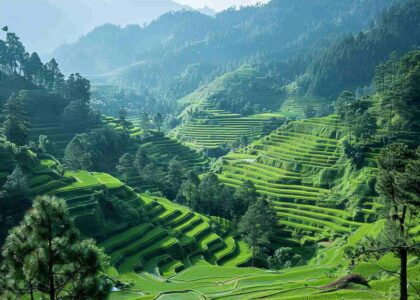
The tea gardens of Darjeeling are not just agricultural operations — they are living museums of a specific kind of cultural and agricultural history. The planting of tea in the Darjeeling hills began in the 1840s under the supervision of British botanists and the East India Company. Over the following decades, the slopes of the Darjeeling hills were transformed into a landscape of terraced tea gardens that today define the visual identity of the region.
Understanding First Flush and Second Flush
The concept of flushes is central to understanding Darjeeling tea. The tea plant (Camellia sinensis) produces new growth in several successive flushes through the growing season. Each flush produces tea with a distinct character.
First Flush (Late February to April): The most prized Darjeeling tea globally. Produced from the first new leaves after winter dormancy, first flush Darjeeling is delicate, light, floral, and slightly greenish. The character varies by garden — some first flush teas have a muscatel (grape-like) note, others are more grassy and spring-like. Premium first flush Darjeeling regularly sells at international auction for extraordinary prices.
Second Flush (May to June): Fuller-bodied, richer, and with the famous muscatel character that defines Darjeeling black tea’s global reputation. Many tea experts prefer second flush Darjeeling for its complexity and depth.
Monsoon Flush (July–August): Lower quality, more astringent tea. Used primarily for blending.
Autumnal Flush (October–November): A pleasant, light, and gentle tea — not as prized as first or second flush but with its own character.
Tea Gardens Open to Visitors Near Darjeeling
Happy Valley Tea Estate: Most accessible, 3 km from town. Good guided factory tours during flush seasons. Tea tasting available.
Makaibari Tea Estate (near Kurseong): Heritage, biodynamic, world-famous. Longer excursion but worth it for serious tea enthusiasts.
Glenburn Tea Estate: A working estate offering both visits and luxury accommodation.
Castleton Tea Estate: Produces some of the most celebrated and expensive Darjeeling teas. Limited visiting access but possible through some package operators.
Sungma Tea Estate: Near Kurseong, with good visiting facilities.
Darjeeling Food Guide: What to Eat and Where
The food of Darjeeling is one of the great underappreciated pleasures of Indian travel. The dominant influences are Nepali, Tibetan, and Lepcha, with Bengali elements appearing in the lower town. The result is a distinctive and deeply satisfying mountain cuisine that is perfect for the cold climate.
Momos
Momos are the ubiquitous street food of Darjeeling — steamed dumplings filled with vegetables, chicken, pork, or buff (buffalo meat), served with a fiery chilli and tomato sauce. The quality of momos in Darjeeling is generally excellent, and the variety has expanded in recent years to include fried momos, soup momos (jhol momo), and even chocolate momos for dessert. Glenary’s on Nehru Road, Kunga Restaurant, and the small stalls around Chowrasta and the Tibetan Market all serve memorable momos.
Thukpa
Thukpa is a Tibetan noodle soup — thick, warming, loaded with vegetables and/or meat, and absolutely perfect for a cold Darjeeling day. A large bowl of thukpa in a small restaurant with a mountain view is one of the signature Darjeeling food experiences.
Gundruk
Gundruk is a traditional Nepali fermented leafy green vegetable — dried, fermented, and used as a sour, pungent condiment or side dish. It is an acquired taste but deeply Nepali, and eating it in Darjeeling with rice and dal is as authentic an experience as you will find.
Sel Roti
A traditional Nepali ring-shaped rice bread, fried until crispy on the outside and soft within. Sel roti is a festival food in Nepal and the Darjeeling hills — most commonly found during Dashain and Tihar but available year-round from some vendors.
Darjeeling Tea — At Source
Drinking Darjeeling tea in Darjeeling itself is an experience no amount of high-quality branded teas elsewhere can replicate. The combination of altitude, water composition, and freshness means the tea here tastes different. Visit a tea garden, buy directly from the estate, and sit at a window with your cup and the mountains in the background.
Where to Eat in Darjeeling
Glenary’s: The most famous café-restaurant in Darjeeling, dating to the early 20th century. Known for baked goods, pastries, and a dining room with old-world charm.
Kunga Restaurant: A legendary Tibetan restaurant on Gandhi Road, famous for momos, thukpa, and thenthuk.
Sonam’s Kitchen: A beloved institution among backpackers and travellers, known for generous portions, honest cooking, and the warmest possible welcome.
Keventers: A century-old snack bar on Nehru Road. The milkshakes, sandwiches, and snacks are part of Darjeeling’s institutional food culture.
Darjeeling Tour Packages: Complete Guide for 2025
Darjeeling Tour Package from Kolkata
The majority of domestic visitors to Darjeeling arrive from Kolkata, and the Kolkata-Darjeeling tour package market is enormous and well-developed. Packages typically include round trip train fare (Kolkata–NJP–Kolkata), accommodation in Darjeeling (2 to 5 nights depending on package), daily sightseeing by vehicle (Tiger Hill, Batasia Loop, toy train joyride, tea garden, zoo, etc.), and some meals.
Standard package format from Kolkata:
- Depart Kolkata by overnight train to NJP
- Transfer to Darjeeling by vehicle
- 2–4 nights in Darjeeling with sightseeing
- Return to NJP and train to Kolkata
Darjeeling Tour Package from Kolkata 3 Nights 4 Days (estimated cost 2025):
- Budget package (budget hotels, shared transfers): ₹5,000–8,000 per person
- Mid-range package (3-star equivalent, private vehicle): ₹8,000–15,000 per person
- Premium package (heritage hotels, all inclusions): ₹18,000–30,000 per person
Darjeeling Tour Package from NJP Under ₹10,000
Darjeeling from NJP on a tight budget is entirely feasible. A 2-night, 3-day Darjeeling package from NJP under ₹10,000 per person is achievable by choosing budget guesthouses (₹500–1,000 per night for a basic double room), using shared taxis for all transfers, eating at local restaurants rather than hotel dining rooms, and using the free or low-cost viewpoints and walking attractions. The Tiger Hill entry fee, toy train joyride, zoo entry, and Batasia Loop entry combined cost less than ₹500 per person. A realistic budget breakdown for a 2-night NJP-based Darjeeling trip is:
- NJP to Darjeeling shared taxi: ₹250 per person one-way
- Budget guesthouse (2 nights): ₹1,000–1,500
- Food (3 days): ₹600–900
- Tiger Hill + sightseeing vehicle: ₹600–800 per person (shared)
- Toy train joyride: ₹300–600
- Zoo and Batasia Loop entry: ₹150
- Miscellaneous: ₹300–500
- Total estimate: ₹3,200–4,700 per person (excluding NJP transport cost)
Darjeeling Sikkim Tour Package
Darjeeling and Sikkim are natural travel partners. The two are geographically adjacent, share cultural and ethnic connections, and together cover an extraordinary range of Himalayan experiences. A Darjeeling Sikkim tour package typically combines 3–4 nights in Darjeeling with 3–4 nights in Gangtok (Sikkim’s capital) and sometimes extends to Pelling (for views of Kanchenjunga from Sikkim’s side), Lachung, or Tsomgo Lake.
Darjeeling Gangtok Tour Package (5 nights 6 days typical itinerary):
- Day 1: NJP arrival, transfer to Darjeeling
- Day 2: Darjeeling sightseeing (Tiger Hill, Batasia Loop, Zoo, Monastery)
- Day 3: Toy train joyride, tea garden, rest
- Day 4: Transfer to Gangtok via Teesta Valley road
- Day 5: Gangtok sightseeing (Rumtek Monastery, MG Marg, Enchey Monastery)
- Day 6: Tsomgo Lake, Baba Mandir, return to NJP
Estimated cost: ₹12,000–22,000 per person depending on accommodation and inclusions.
Darjeeling Sikkim Gangtok Tour 7 Nights 8 Days
A 7-nights-8-days Darjeeling Sikkim tour allows a more leisurely pace and additional destinations:
- 3 nights Darjeeling (full sightseeing + toy train + tea garden)
- 2 nights Gangtok (main sightseeing)
- 2 nights Pelling or Yuksom (Kanchenjunga views, monastery circuit)
- Return to NJP on day 8
Estimated cost: ₹18,000–35,000 per person.
Darjeeling Sikkim Bhutan Tour Package 12 Days
The 12-day Darjeeling-Sikkim-Bhutan circuit is one of the most comprehensive Himalayan touring packages available:
- 2–3 nights Darjeeling
- 3 nights Gangtok and Sikkim (Pelling or North Sikkim options)
- 4–5 nights Bhutan (Thimphu, Paro, Tiger’s Nest)
- Return to Bagdogra or Kolkata
Bhutan specifics: Note that Bhutan charges a daily Sustainable Development Fee (SDF) for all tourists, currently at USD 100 per day per person for most international visitors. Indian nationals do not pay the SDF but do require a specific permit. The Bhutan entry is through Phuentsholing from Bagdogra or NJP.
Estimated cost for 12 days (excluding Bhutan SDF for international visitors): ₹30,000–60,000 per person.
Darjeeling Bhutan Tour Package 10 Days from Kolkata
For a focused Darjeeling-Bhutan experience without the full Sikkim extension:
- Kolkata to Bagdogra/NJP by air or train
- 2–3 nights Darjeeling
- Drive through Siliguri and Jaigaon to cross the Phuentsholing border into Bhutan
- 4–5 nights Bhutan (Thimphu, Paro, Punakha)
- Return to Bagdogra/Kolkata
Darjeeling Solo Trip Guide for Women Travellers
Darjeeling is one of India’s most safe and welcoming destinations for solo female travellers. The town is compact, well-lit, busy with tourists and residents throughout the year, and has a strong culture of hospitality that extends naturally to solo travellers. Key safety and practical notes:
Is Darjeeling safe for solo female travellers? Yes — it consistently ranks among India’s safer hill destinations. The hill station’s compact urban core, the presence of tourists from across the world, and the generally respectful local culture make it comfortable for women travelling alone. Standard urban safety precautions apply (avoid poorly lit areas at night, keep accommodation details private with strangers), but Darjeeling is not a destination where heightened anxiety is warranted.
Solo travel tips for women in Darjeeling:
- Stay in the main town area (Mall Road, Nehru Road, Chowrasta vicinity) rather than isolated areas
- Use pre-booked shared taxis from established taxi stands rather than random vehicles
- For Tiger Hill, go with a hotel group, a tour vehicle, or ensure pre-arranged transport — the 3:30 AM departure can feel isolated if going alone by foot
- Connect with other travellers at guesthouses or through travel communities for trekking activities
- Book accommodation in advance and share details with someone at home
- The Singalila ridge trek and Sandakphu trek are manageable for solo women with a registered local guide
Darjeeling Trip Cost for 2 Persons : Honest Budget Breakdown
Planning the finances for a Darjeeling trip is something most travellers underestimate. Here is an honest, category-by-category breakdown for a couple (2 persons) on a 4-nights-5-days trip to Darjeeling in 2025.
Getting There and Back
Train (Kolkata to NJP return, 2 persons): ₹2,000–5,000 depending on class (sleeper: ₹1,000–1,500 for two; 3AC: ₹2,500–4,000 for two)
NJP to Darjeeling shared taxi (return, 2 persons): ₹1,000–1,200 (₹250 per seat each way x 2)
Private vehicle NJP–Darjeeling–NJP: ₹4,000–5,000
Accommodation (4 nights)
Budget guesthouse: ₹800–1,500 per night (₹3,200–6,000 for 4 nights)
Mid-range hotel: ₹2,000–4,500 per night (₹8,000–18,000 for 4 nights)
Heritage/premium hotel: ₹5,000–15,000 per night (₹20,000–60,000 for 4 nights)
Sightseeing
Tiger Hill (vehicle + entry for 2): ₹1,000–1,500 (shared vehicle ₹600–800 + entry ₹100–200)
Toy train joyride (2 persons): ₹600–1,200
Zoo (2 persons): ₹200
Batasia Loop (2 persons): ₹100
Tea garden tour (Happy Valley, 2 persons): ₹200–400
Rock Garden / Ropeway (2 persons): ₹500–600
Peace Pagoda / Observatory Hill: Free
Food
Budget (street food + local restaurants): ₹400–600 per day for 2 (₹2,000–3,000 for 5 days)
Mid-range (sit-down restaurants, café breakfasts): ₹800–1,200 per day for 2 (₹4,000–6,000 for 5 days)
Premium dining: ₹1,500–2,500 per day for 2
Miscellaneous
Tea purchases, handicrafts, clothing, tips: ₹1,000–3,000 for 2
Total Estimate for 2 Persons (4 nights 5 days, excluding train fare from Kolkata)
| Budget Level | Total (excluding Kolkata–NJP train) |
| Budget | ₹6,000 – ₹9,000 |
| Mid-range | ₹15,000 – ₹25,000 |
| Premium | ₹35,000 – ₹70,000 |
4-Day Darjeeling Itinerary for First-Time Visitors
Here is the most practical and rewarding 4-day, 3-night itinerary for first-time Darjeeling visitors arriving by train to NJP.
Day 1: Arrival, Orientation, and Evening Walk
Morning/Afternoon: Arrive NJP by overnight train or morning flight to Bagdogra. Shared taxi or private vehicle to Darjeeling (3–4 hours). Check into hotel. Lunch on Mall Road.
Afternoon: Stroll to Chowrasta. Walk the Mall Road. Visit Observatory Hill for first views of the Himalayan setting. Evening tea at a Chowrasta café with Kanchenjunga views (if clear).
Evening: Dinner at Kunga (momos, thukpa) or Glenary’s (bakery items and café food).
Day 2: Tiger Hill Sunrise, Toy Train, Batasia Loop
Pre-dawn (3:30 AM): Pre-arranged vehicle to Tiger Hill for sunrise. Dress warmly. Spend 45 minutes to 1 hour at the viewpoint.
Morning: Return via Batasia Loop. Breakfast at hotel. Rest for 1–2 hours.
Late morning: Toy train joyride from Darjeeling to Ghoom and back. Approximately 2 hours.
Afternoon: Visit Ghoom Monastery. Visit Padmaja Naidu Zoo (red pandas, snow leopards). Visit Himalayan Mountaineering Institute Museum.
Evening: Shopping on Laden La Road (Tibetan Market). Dinner and early night.
Day 3: Tea Garden, Rock Garden, Peace Pagoda
Morning: Visit Happy Valley Tea Estate for guided factory tour (8–10 AM is ideal). Purchase tea directly from estate shop.
Mid-morning: Peace Pagoda (walk or taxi). Nightingale Park.
Afternoon: Excursion to Rock Garden and Barbotey waterfall (10 km from town). Option: extend to Mirik Lake for boating and scenery (52 km from town — plan as a half-day or full-day trip).
Evening: Chowrasta promenade. Sunset over the valley. Dinner at Sonam’s Kitchen or local dhaba.
Day 4: Kalimpong Excursion or Final Sightseeing, Evening Departure
Option A: Day trip to Kalimpong (51 km). Visit Durpin Monastery, Zang Dhok Palri Phodang, flower nurseries, Deolo Hill. Return to Darjeeling by afternoon.
Option B: Revisit preferred spots, buy last-minute tea and souvenirs. Visit Lloyd’s Botanical Garden. Afternoon transfer to NJP for evening train to Kolkata.
Darjeeling Itinerary — 7 Days (Complete Experience)
For those with a week, a 7-day Darjeeling itinerary can incorporate a 3–4 day Sandakphu/Singalila trek:
- Day 1: Arrive Darjeeling, settle, evening orientation
- Day 2: Tiger Hill sunrise, toy train, Batasia Loop, Ghoom Monastery, Zoo
- Day 3: Tea garden morning, Ropeway, Rock Garden, Peace Pagoda
- Day 4: Transfer to Mane Bhanjang, begin Sandakphu trek (Day 1 of trek: Mane Bhanjang → Tumling)
- Day 5: Trek Day 2: Tumling → Kalipokhri
- Day 6: Trek Day 3: Kalipokhri → Sandakphu (summit, views of Everest and Kanchenjunga)
- Day 7: Descent to Mane Bhanjang, return to Darjeeling, transfer to NJP for departure
Where to Stay in Darjeeling for the Best Kanchenjunga View
The best Kanchenjunga views from Darjeeling accommodation are found in hotels on the upper western slopes of the town, facing the Himalayan panorama. Key areas and properties:
The Windamere Hotel: The gold standard for mountain views from a colonial-heritage property. Evening visibility of Kanchenjunga from the hotel’s garden and upper rooms is exceptional.
Mayfair Darjeeling: Good Kanchenjunga view rooms. Well-maintained grounds.
Sinclairs Darjeeling: A well-established property with a good view aspect and comfortable facilities.
Hotel Dekeling: A smaller, highly regarded mid-range property known for warm hospitality, excellent food, and Himalayan views.
Revolver Hostel: The best-known budget option for solo travellers and young groups. Good social atmosphere.
Best homestays in Darjeeling for couples: Homestays offering Kanchenjunga views and personal service include those in the Jalapahar and North Point areas. Many homestays offer comfortable rooms with attached bathrooms, home-cooked meals, and the kind of intimate hospitality that larger hotels cannot replicate. Check established booking platforms and look for properties with recent positive reviews specifically mentioning mountain views.
Darjeeling in December: Weather, Snowfall & What to Expect
December is one of the most enquired-about months for Darjeeling travel. The two biggest questions are: how cold is it, and will there be snow?
How cold is Darjeeling in winter (December)? December temperatures in Darjeeling average between 2°C and 10°C. At night and in the early morning (particularly during the pre-dawn Tiger Hill excursion), temperatures can drop close to 0°C. Wind chill adds to the effective cold. Proper layering is essential: thermal base layers, a mid-layer fleece, and a windproof, preferably waterproof outer jacket are minimum requirements. Good warm socks, gloves, and a hat are not optional.
Is snowfall possible in Darjeeling in December? Yes, snowfall in Darjeeling is possible in December, but it is not guaranteed every year. The town itself sits at approximately 2,050 metres — high enough for occasional snow but not in the zone of reliable annual snowfall. The higher elevations above 2,500 metres (the areas around Sandakphu and Phalut) receive more consistent snowfall. In years when Darjeeling town does see snow, it is typically light — a dusting to a few inches — rather than heavy accumulation.
What Darjeeling looks like in December: Clear mornings offer the most spectacular Kanchenjunga and Himalayan views of the entire year (along with November). The air is exceptionally clear and the snow-capped peaks appear in extraordinary detail. The town feels quieter and more intimate than during peak autumn. Christmas is celebrated in Darjeeling with decorations on Mall Road and special menus at hotels and restaurants — the colonial heritage and Christian minority population give Christmas a genuine presence here.
Darjeeling in April: Rhododendron Season and Spring
April in Darjeeling is among the most visually spectacular months in the region’s calendar. The rhododendron season — the flowering of the Himalayan rhododendron forests across the Singalila ridge and the higher slopes — transforms the landscape. There are over 40 species of rhododendron native to the Darjeeling Himalayan region, ranging from small-leafed alpine varieties at high elevations to the spectacular tree-sized Rhododendron arboreum whose blood-red blooms dominate the ridge forests in spring.
For trekkers on the Singalila ridge in April, the combination of the rhododendron forest in full flower with the snow-capped Himalayan peaks behind them is genuinely one of the most beautiful natural spectacles in all of South Asia. The best viewing is typically in March at lower elevations and April at higher elevations along the Sandakphu trail.
Darjeeling in April rhododendron season guide: The rhododendron forests around Tumling (2,970 metres) and Kalipokhri are typically at their peak in early to mid-April. Higher up on the trail towards Sandakphu, the bloom continues into late April. In Darjeeling town itself, cherry blossoms and magnolias add to the spring colour.
Offbeat Places to Visit in Darjeeling
Beyond the well-worn sightseeing circuit, Darjeeling has a range of offbeat destinations that reward travellers who venture off the standard routes.
Senchal Lake and Wildlife Sanctuary
About 10 kilometres from Darjeeling on the road towards Tiger Hill, Senchal Lake sits within the Senchal Wildlife Sanctuary at an elevation of approximately 2,400 metres. The lake supplies Darjeeling town’s drinking water and the surrounding sanctuary is excellent for birding. The forest here is home to deer, leopards (rarely seen), and a good selection of Himalayan bird species. A peaceful, uncrowded walk through the sanctuary provides genuine solitude very close to the town.
Lamahatta
A small village eco-park about 23 kilometres from Darjeeling, Lamahatta sits at approximately 1,800 metres and is characterised by pine forests, orchids, and exceptional Kanchenjunga views. The Lamahatta Eco Park has been developed by the Gorkhaland Territorial Administration as a model eco-tourism destination. It is quieter, less commercialised, and more naturally beautiful than many closer options.
Lepchajagat
A forest bungalow destination in deep Himalayan forest about 19 kilometres from Darjeeling, Lepchajagat (elevation approximately 2,130 metres) is one of Darjeeling’s most genuinely peaceful retreats. It is almost exclusively forest — tall magnolias, rhododendrons, and oak — with no commercial development beyond a small number of forest lodges. For nature lovers, birders, and travellers who want complete solitude very close to Darjeeling, it is exceptional.
Tinchuley
An emerging eco-tourism village about 30 kilometres from Darjeeling, Tinchuley (2,035 metres) has some of the best orange orchards and cardamom plantations in the region. The village offers homestay accommodation and extraordinary views of Kanchenjunga and the eastern Himalayan range. It is particularly popular in the orange season (October–November) and during rhododendron time (March–April).
Kalimpong (Full Day)
Though not technically in Darjeeling district, Kalimpong deserves more than a day trip if you can manage it. The town’s flower markets (particularly the Thursday and Sunday haat), its Tibetan monastery circuit (Zang Dhok Palri and Durpin Hill Monastery are both significant), its Scottish church and Morgan House, and its traditional crafts scene make it one of the most distinctive small towns in the eastern Himalayas.
Lava and Lolegaon
About 50–60 kilometres from Darjeeling towards the Neora Valley direction, Lava and Lolegaon are two of the most beautiful offbeat destinations in the broader region. Lava sits at the edge of the Neora Valley National Park — the last remaining intact virgin forest in the eastern Himalayas — and is extraordinary for birdwatching. Lolegaon has a famous forest canopy walk among its attractions.
Darjeeling Travel Tips
These are the practical, experience-based travel tips that make the difference between a good Darjeeling trip and a great one.
Altitude and acclimatisation: Darjeeling’s altitude of 2,050 metres is not extreme enough to cause serious altitude sickness in healthy adults, but some people do experience mild headaches and fatigue in the first 24 hours. Rest on arrival day, stay well hydrated, avoid alcohol on the first night, and ascend slowly. For higher elevation treks to Sandakphu (3,636 metres), allow proper acclimatisation days.
What to pack: Regardless of season, carry at least one warm layer. Even in summer, evenings in Darjeeling can be cool. In October–April, thermal layers, a good jacket, gloves, and a hat are essential. Sunscreen is important at altitude even in winter. Good walking shoes are necessary for the hill town’s many stairs and uneven paths.
Cash: Darjeeling has ATMs but they occasionally run dry or out of cash, particularly during peak season and long weekends. Carry adequate cash from Siliguri or NJP. Not all small guesthouses, tea garden shops, and trek accommodation accept cards.
Mobile connectivity: Jio and BSNL have the best coverage in the Darjeeling hills. Airtel generally works well in town. Data connectivity can be slow during peak hours.
Hiring vehicles: For Tiger Hill and most sightseeing, vehicles are shared within tour packages or available for hire from the motor stand on Laden La Road. Agree on the price before departure. Shared vehicles are significantly cheaper than private hire.
Toy train booking: Book the toy train joyride online in advance. Walk-up tickets exist but availability is not guaranteed, particularly during peak season.
Respect local culture: Darjeeling is a place of serious religious life — monasteries are active places of worship. Dress respectfully (shoulders and knees covered) when visiting religious sites. Ask permission before photographing monks or at prayer.
Environmental responsibility: The Darjeeling hills are ecologically sensitive. Use water sparingly, avoid single-use plastics (carry a reusable bottle), and take your litter with you, particularly on trekking routes.
Photography at Tiger Hill: Bring a tripod if you have one. The pre-dawn light requires longer exposures. A telephoto or zoom lens significantly improves Himalayan peak photography.
Tea buying: Buy directly from tea estates or the Darjeeling Tea Planters’ Association outlets rather than from middlemen shops. The provenance and quality are more reliable.
10 Frequently Asked Questions About Darjeeling
1. How Many Days Are Enough for a Darjeeling Trip?
A minimum of 3 nights and 4 days is recommended to cover the main Darjeeling sightseeing circuit — Tiger Hill, the toy train joyride, Batasia Loop, Ghoom Monastery, the zoo, and a tea garden visit — without rushing. Four nights and five days allows a more relaxed pace with a day trip to Mirik, Kalimpong, or the Rock Garden area. For those wishing to include the Sandakphu trek, 7 to 8 days total is ideal. For a combined Darjeeling-Sikkim-Gangtok tour, 8 to 10 days is comfortable.
2. How to Reach Darjeeling from Kolkata?
The most practical route is by overnight train from Howrah or Sealdah to New Jalpaiguri (NJP), followed by shared taxi or private vehicle to Darjeeling (3–4 hours, approximately 80 km). Alternatively, fly from Kolkata to Bagdogra Airport (approximately 1 hour) and take a taxi from Bagdogra to Darjeeling (approximately 3 hours). Driving from Kolkata by road takes 12–14 hours.
3. How to Book Darjeeling Toy Train Tickets Online?
Darjeeling toy train tickets can be booked online through the IRCTC website (www.irctc.co.in) — search for the Darjeeling Himalayan Railway joy ride service — or through the official DHR booking portal. Select the Darjeeling to Ghoom joyride for the most convenient experience. Book at least 2–3 weeks in advance during October–November and March–May peak season, as seats sell out quickly.
4. How Much Does a Darjeeling Trip Cost for 2 Persons?
A 3-night, 4-day Darjeeling trip for 2 persons from Kolkata costs approximately ₹8,000–15,000 (budget to mid-range) including train fare, accommodation, meals, and sightseeing. Premium options (heritage hotels, private vehicle, all inclusions) run ₹30,000–50,000 for two. Solo budget travel is achievable at ₹3,000–5,000 per person for a 3-day trip excluding train fare from Kolkata.
5. What Is the Best Time to Visit Darjeeling?
October and November are the best months for clear Himalayan views, good weather, and excellent trekking conditions. March to May are the second-best months, with pleasant temperatures and the rhododendron season. December and January offer the possibility of snow and are popular for the cold-weather experience. Avoid June to September (monsoon) unless you are an experienced traveller comfortable with weather disruptions.
6. Is the Darjeeling Toy Train Still Running in 2025?
Yes, the Darjeeling Himalayan Railway (UNESCO World Heritage Site) is operational in 2025. Both the full NJP to Darjeeling service (approximately 7–8 hours) and the popular Darjeeling to Ghoom joyride (approximately 2 hours round trip) continue to operate. Check the current schedule as timings vary by season. Book online in advance, especially during peak season.
7. Is Darjeeling Safe for Solo Female Travellers?
Yes, Darjeeling is considered one of India’s safer destinations for solo female travellers. The town is compact, well-populated, and has a strong tourism culture that is generally welcoming and respectful. Standard precautions apply (avoid poorly lit areas at night, use established transport, keep accommodation details private). The Singalila ridge trek is manageable for solo women with a registered local guide. Women’s travel communities and guesthouses with common spaces are good resources for meeting other travellers.
8. How Difficult Is the Sandakphu Trek from Darjeeling?
The Sandakphu trek from Mane Bhanjang is rated moderate in difficulty. There is no technical climbing involved, but daily stages involve sustained uphill walking of 10–15 kilometres at elevations between 2,100 metres and 3,600 metres. Altitude is the main physical challenge — the transition from Darjeeling town (2,050 metres) to Sandakphu (3,636 metres) requires good fitness and proper acclimatisation. For well-prepared trekkers with reasonable walking fitness, the Sandakphu trek is accessible and enormously rewarding. Trek poles are helpful. Porters and guides are available from Mane Bhanjang and strongly recommended.
9. When Is the Best Time to See Sunrise at Tiger Hill?
The best sunrise views at Tiger Hill occur during October and November (post-monsoon clearance, exceptional visibility) and March to early May (clear pre-monsoon skies). December and January also offer clear views on the many cloudless winter days. The worst months for Tiger Hill sunrise are the monsoon months (June–September) when persistent cloud cover means the sunrise experience is often obscured. Departure from Darjeeling town should be around 3:30–4:00 AM, adjusted by season.
10. Why Is Darjeeling Called the Queen of Hills?
The title “Queen of Hills” was given to Darjeeling by the British, who developed it as their primary hill station and sanatorium in Bengal. The name reflects the town’s extraordinary setting — its commanding position on a ridge above the surrounding valleys, its remarkable views of the Himalayan massif, its cool climate so dramatically different from the Bengal plains, and the colonial elegance of its architecture and institutions. The title stuck because Darjeeling genuinely earns it: no other hill station in eastern India offers the same combination of natural grandeur, cultural depth, and atmospheric character.
Darjeeling Himalayan Railway — A Deeper Look at the UNESCO Heritage
The Darjeeling Himalayan Railway deserves more than the mention most tour guides give it. The DHR was built between 1879 and 1881 by the engineering firm Franklin Prestage, overcoming extraordinary topographical challenges to connect the steaming plains of the Bengal Terai with the high Darjeeling ridge. The railway runs in the narrowest of narrow gauges — just 2 feet (610 mm) — a design choice that enabled the sharp curves and steep gradients the terrain required.
The engineering solutions developed for the DHR are remarkable. The Batasia Loop — where the track spirals 360 degrees to gain 40 metres of altitude — is one of four such loops on the line. The Z-reverses at Agony Point and elsewhere are switchbacks where the train ascends by reversing direction, inching up terrain that a conventional train simply could not manage.
The locomotives that haul the toy train are themselves remarkable survivors. The classic B-class steam engines used on the DHR date to designs from the late 19th and early 20th century — still functional, still hauling tourists through the hills, and still representing one of the last regular steam-hauled passenger railways in the world.
The UNESCO inscription in 1999 recognised the DHR as an “outstanding example of the interchange of human values” — specifically the ingenuity applied to solving the engineering problem of scaling the Himalayan foothills. The inscription has helped preserve the railway when pure economics might have argued for closure, and the DHR today operates as both a working transport service and a heritage tourism attraction of global significance.
Darjeeling and Kanchenjunga: A Mountain That Defines a Place
Kanchenjunga — 8,586 metres, the world’s third highest mountain — is not just a view from Darjeeling. It is a presence. The mountain’s massif, consisting of five peaks, occupies the western horizon from Darjeeling with an authority that no photograph adequately conveys. The scale of the thing, visible from a hill town that is itself 2,050 metres high, produces a spatial compression that makes the mountain feel both impossibly large and somehow intimate.
The Sikkim side of Kanchenjunga is particularly sacred — the mountain is considered the guardian deity of Sikkim, and its summit has traditionally not been stood upon as a mark of respect for its sacred status. Even Edmund Hillary and Tenzing Norgay, when they returned to the region after Everest, treated Kanchenjunga with particular reverence.
For photographers, the light on Kanchenjunga changes dramatically across the day and season. The golden hour at sunrise from Tiger Hill is the iconic shot, but the late afternoon light on the western faces, the full moon rising behind the Kanchenjunga massif, and the blue-grey pre-dawn silhouette are all extraordinary subjects.
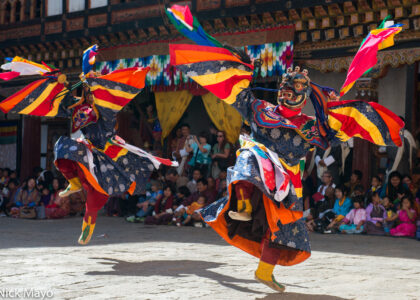
Darjeeling’s Cultural Layers: Nepali, Tibetan, British, and Bengali
Darjeeling’s identity cannot be reduced to any single culture. The town is a palimpsest of different historical moments and cultural influences, each leaving permanent marks on the built environment, the cuisine, the religious life, and the social fabric.
The Gorkha (Nepali) community forms the majority of Darjeeling’s population and is culturally, linguistically, and politically dominant. Nepali is the working language of daily life. The demands for Gorkhaland — a separate state — reflect this community’s desire for political self-determination within the Indian union.
Tibetan refugees and their descendants form a significant cultural and economic presence, particularly in the Tibetan handicrafts market, the monastery institutions, and the older parts of the town. The Tibetan cultural contribution to Darjeeling — in terms of cuisine, religious art, medicinal practice, and aesthetic — is profound and visible everywhere.
The British colonial infrastructure — the buildings, the railways, the tea estates, the educational institutions — remains physically intact in many places and continues to shape Darjeeling’s self-presentation and tourism appeal. St. Paul’s School, the Raj Bhavan, the old planters’ clubs, and the general layout of the hill station all speak to a specific moment in 19th-century British imperial planning.
The Bengali connection — Darjeeling as West Bengal’s most celebrated hill retreat — adds a further layer of cultural meaning. For generations of Bengali families, a trip to Darjeeling has been an aspirational, almost ritual experience — the subject of literature, of Satyajit Ray films, of poetry and personal history.
Darjeeling vs. Ooty for Honeymoon: A Comparison
The question of Darjeeling versus Ooty for honeymoon is a frequently asked one. Here is an honest comparison:
Darjeeling offers Himalayan scale that Ooty simply cannot match. The sunrise views at Tiger Hill, the Kanchenjunga presence, the Buddhist monasteries, the UNESCO toy train, the world’s finest tea, and the Tibetan cultural character all combine to produce an experience that is genuinely singular. The cooler temperatures and mountain drama add a romantic intensity that flatlands and other hills cannot replicate. The combined experience of altitude, history, culture, and natural beauty gives Darjeeling a romantic depth that makes it a genuinely special honeymoon destination.
Ooty (Udhagamandalam) in Tamil Nadu is greener, has better infrastructure for car travel, is less cold, and is closer to Kerala extension packages. Its Nilgiri Mountain Railway (also UNESCO-listed) is different but equally charming. Ooty’s Botanical Garden is exceptional.
The verdict for honeymooners: Darjeeling wins on the dimension of raw romantic drama — mountain scale, Himalayan sunrises, Tibetan atmosphere. Ooty wins on accessibility and greenery. For couples who want the most visually dramatic and emotionally intense experience, Darjeeling is the better honeymoon destination in India’s hill station hierarchy.
Darjeeling’s Buddhist Heritage: Monasteries and Spiritual Sites
The Buddhist traditions of Darjeeling are rooted in the Tibetan Vajrayana tradition and have been present in the hills for centuries, long predating the British development of the hill station. The monasteries (gompas) of Darjeeling and its surrounds are active religious institutions, not tourist attractions — though visitors are welcome when respectful.
Yiga Choeling Monastery, Ghoom: The oldest and most significant. Established 1850. The 15-foot Maitreya statue is the centrepiece.
Bhutia Busty Gompa: One of the oldest monasteries in Darjeeling town itself, with a long history going back to the early 19th century and significant thangka collections.
Aloobari Monastery (Karma Dorje Ling): Near the zoo, with an active monastic community.
Druk Thupten Sangag Choling (Dali Monastery): A relatively newer but significant monastery on the North Point road, offering excellent views.
Enchey Monastery: Located above the town near the North Point college campus, Enchey is an important Nyingma-tradition Tibetan Buddhist monastery known for its colourful annual Chaam (masked dance) festival, typically held in January.
The Singalila Ridge and Sandakphu: The View of Four Highest Peaks
The view from Sandakphu on a clear morning is one of those rare experiences that rewires your sense of scale. Standing at 3,636 metres — the highest point in West Bengal — you can see, in a single, unobstructed panoramic sweep: Everest (8,849 metres, just visible as a pyramid behind Lhotse on the Nepal horizon), Kanchenjunga (8,586 metres, dominant and close), Lhotse (8,516 metres), and Makalu (8,485 metres). Four of the world’s five highest peaks simultaneously visible from one point on the planet.
The Singalila ridge that connects Mane Bhanjang to Sandakphu and beyond to Phalut runs literally on the Nepal-India border. Walking the ridge, you have Nepal on your left and West Bengal on your right, with the Himalayan giants rising to the west and the Darjeeling hill ranges rolling to the east. It is one of the most extraordinary long-distance trekking positions available on foot anywhere in South Asia.
Practical Information Summary for Darjeeling 2025
| Category | Details |
| Best Time | October–November (best), March–May (second best) |
| Altitude (town) | 2,050 metres (6,710 feet) |
| Nearest rail junction | New Jalpaiguri (NJP), 80 km |
| Nearest airport | Bagdogra (IXB), 90 km |
| NJP to Darjeeling | 3–4 hours by road |
| Tiger Hill entry fee | ₹50 (open) / ₹100 (glass tower) |
| Toy train joyride duration | ~2 hours (Darjeeling–Ghoom–Darjeeling) |
| Zoo entry fee | Adults ~₹100 |
| Zoo closed day | Thursday |
| Happy Valley tour fee | ~₹50–100 |
| Currency | Indian Rupee (INR). ATMs available but carry cash |
| Languages | Nepali (dominant), Hindi, Bengali, English widely understood in tourist areas |
| Permits required | Inner Line Permit NOT required for Darjeeling town. Singalila National Park permit required for trekking |
| Emergency | Tourist Police: 0354-2254220 |
| STD code | 0354 |
Darjeeling Shopping Guide: What to Buy and Where
Shopping in Darjeeling is a genuine pleasure — a mix of Tibetan handicrafts, the finest teas in the world, Nepali textiles, Buddhist artefacts, and the kind of small-town market culture that rewards slow browsing far more than hurried buying.
Darjeeling Tea
This is the most obvious and most justifiable purchase. Buying Darjeeling tea directly from the source — from an estate shop at Happy Valley, Makaibari, or from the Darjeeling Tea Planters’ Association’s authorised outlets — guarantees authenticity and typically offers better quality at comparable or lower prices than specialty tea retailers elsewhere. The key considerations when buying Darjeeling tea:
Flush matters: First flush (February–April harvest) is the most prized globally and the most expensive. Second flush (May–June) offers the famous muscatel character at a slightly lower price point. Autumnal flush (October–November) is the most affordable and perfectly pleasant for daily drinking.
What to look for: Whole leaf or broken leaf grades are preferable to fannings (the dusty fragments used in most tea bags). Look for FTGFOP (Finest Tippy Golden Flowery Orange Pekoe) or TGFOP grade designations for premium teas.
How much to buy: A 50g packet of good first or second flush Darjeeling tea from an estate shop starts at approximately ₹300–500 and can go up to ₹2,000 or more for premium grades. A 100g packet makes a good gift. Estate-branded tins are also available.
Avoid: Buying loose tea from uncertified roadside vendors or shops without estate documentation — fake or misrepresented Darjeeling tea is a known issue in the retail market.
Tibetan Handicrafts
The Tibetan Market on Chowk Bazaar Road and the vendors around Chowrasta offer a good selection of authentic and semi-authentic Tibetan handicrafts — thangka paintings, prayer wheels, singing bowls, prayer flags, mani stones, beaded jewellery, and woollen clothing including traditional Tibetan jackets and chubas. Quality and authenticity vary considerably. Take time to browse multiple vendors before buying, and exercise reasonable scepticism about claims of age or rarity.
Thangka paintings: Hand-painted Tibetan Buddhist scroll paintings depicting deities, mandalas, and cosmic diagrams. Genuine thangkas are works of significant skill and can range from ₹2,000 for small, simple pieces to ₹15,000 or more for large, detailed works. Be wary of printed reproductions sold as painted originals.
Singing bowls: Tibetan singing bowls, used in meditation and ritual, are available in various sizes and qualities. A well-made bowl of good bronze at a medium size runs approximately ₹500–1,500. Test the sound before purchasing — it should be clear, resonant, and sustain for several seconds.
Prayer flags: Inexpensive, lightweight, and a perfect Darjeeling souvenir. A string of traditional Tibetan lung ta (wind horse) prayer flags in the classic five colours costs approximately ₹50–200 depending on size and number.
Woolens and Textiles
The Darjeeling hills and the Tibetan community both have strong textile traditions. Woollen scarves, stoles, yak wool blankets, and hand-knitted woollen items are all available. The quality of hand-knitted items varies — look for tightly constructed pieces with even stitch density. A good quality woollen stole runs ₹500–2,000. Yak wool products, if genuine, are exceptionally warm and soft.
Pashmina caveats: Claims of pashmina are widespread in Darjeeling’s markets, as elsewhere in India. Genuine pashmina is a specific fine Cashmere goat fibre primarily from Ladakh and Kashmir. Most items sold as pashmina in Darjeeling are blended wool or acrylic. If you want genuine pashmina, buy from reputable certified retailers.
Bamboo and Cane Crafts
The traditional crafts of the Lepcha and Nepali communities include fine bamboo and cane basketry, traditional woven items, and decorative objects. The Government Emporia and Nathmull’s gift shop carry selections of local crafts.
Books About Darjeeling
Darjeeling has generated a remarkable literary output — histories, memoirs, travel writing, and fiction that range across the Bengali literary tradition, the British colonial period, and contemporary local writers. Nathmull’s bookshop on Laden La Road is the best bookshop in town and carries a curated selection of regional literature, history, and travel writing.
Darjeeling for Families: Travelling with Children
Darjeeling is a genuinely excellent family destination. The combination of the toy train, the zoo with its red pandas and snow leopards, the mountain scenery, the pleasant temperatures, and the child-friendly scale of the town makes it one of the most rewarding hill station experiences for families in India.
Best Activities for Children in Darjeeling
Padmaja Naidu Zoological Park: The red panda, snow leopard, and Himalayan black bear enclosures are the primary draws for children. The zoo’s educational approach and conservation mission give parents good material for discussion. Plan for at least 2–3 hours.
The Toy Train Joyride: Children universally love the toy train. The small scale, the steam engine, the whistle, and the slow pace through the hills make for an experience that few children forget. Book first-class seats for the best views.
Batasia Loop: The miniature garden, the war memorial, and the train loop are all excellent for children — accessible, interesting, and compact. An hour here is well spent.
Rock Garden (Barbotey): The waterfall, the climbing paths, and the natural landscape make the Rock Garden an excellent outdoor activity for children with energy to burn.
Himalayan Mountaineering Institute Museum: The mountaineering equipment, historical photographs, and story of Tenzing Norgay’s Everest ascent resonate well with older children and teenagers with an adventurous mindset.
Practical Family Travel Tips for Darjeeling
Altitude: Children generally acclimatise well to Darjeeling’s moderate altitude (2,050 metres). Ensure good hydration and watch for unusual fatigue or headaches in the first 24 hours.
Weather: Dress children in layers — even a warm day can turn cold rapidly in the hills, particularly in the late afternoon when clouds build and temperatures drop.
Food: Children who are unfamiliar with spicy food will have plenty of options in Darjeeling — bakeries (Glenary’s is a favourite), pasta, sandwiches, and the Chinese-influenced noodle dishes of Darjeeling’s street food scene are generally accessible for young palates.
Pacing: Darjeeling is hilly — significantly hilly. Even short distances involve staircases, steep paths, and uneven terrain that can exhaust younger children quickly. Build rest time into the itinerary.
Darjeeling Photography Guide: How to Capture the Hills
Darjeeling is one of India’s most photogenic destinations. The combination of mountain scale, colonial architecture, tea garden geometry, atmospheric mist, and the human life of the Gorkha hills creates photographic opportunities that reward both amateur and professional photographers.
Tiger Hill Sunrise Photography
The Tiger Hill sunrise is the most technically demanding shot in the Darjeeling photography canon. Here is how to do it well:
Equipment: A DSLR or mirrorless camera with good high-ISO performance. A wide-angle lens (16–35mm equivalent) for the panoramic mountain sweep. A telephoto lens (200–400mm equivalent) for isolating Kanchenjunga or Everest detail. A sturdy tripod for the pre-dawn low-light shots. An intervalometer for time-lapse sequences.
Settings: In the pre-dawn darkness, ISO 400–1600, f/2.8–4, 10–30 second exposures for star field shots of the mountain silhouettes. As light builds, drop ISO progressively and speed up the shutter to freeze the colour transitions.
Composition: The most powerful Tiger Hill compositions use either the wide panoramic sweep (getting as much of the Himalayan range as possible) or tight telephoto isolations of Kanchenjunga’s snow slopes with the alpenglow. A middle group of people in silhouette against the dawn sky makes for a powerful human-scale counterpoint.
Timing: Arrive 30 minutes before the scheduled sunrise. The 15–20 minutes before the actual sunrise when the sky transitions from deep blue to violet to orange are often the most photographically rewarding.
Tea Garden Photography
The tea gardens are extraordinarily photogenic at any time of day, but the golden hours — the first hour after sunrise and the hour before sunset — produce the most beautiful light through the rows of tea bushes. Morning mist is a particular asset — the wisps of fog that curl between the rows in early morning add depth and atmosphere that flat midday light cannot match.
The tea pluckers: With permission (almost always graciously given), the women pluckers working the rows make for compelling portrait photography. The traditional bamboo baskets, the dexterity of plucking, and the vivid colours of the saris against the green tea garden background are visually extraordinary. Always ask permission and always show gratitude — a tea purchase from the estate after photographing their workers is the right thing to do.
Toy Train Photography
The toy train offers both classic exterior shots and intimate interior moments. For exterior shots, the Batasia Loop at sunrise — when a train passes and you can compose the steam engine against the mountain background — is the definitive image. Arrive at Batasia Loop 30 minutes before the first joyride departure and position yourself inside the loop garden for a head-on shot of the approaching train.
For interior shots, a window seat offers the landscape rolling past in cinematic sequences. The Darjeeling to Ghoom section passing through the tea garden lanes is particularly good for this.
Monastery Photography
The monasteries of Darjeeling and Ghoom offer interior photography opportunities that require patience and respect. The low-light interiors, the butter lamps, the thangka paintings, and the faces of monks in prayer all offer extraordinary photographic subjects. Use available light (a fast prime lens at f/1.8 is ideal), avoid flash (it is disrespectful and produces flat results), and move quietly. Always ask permission before photographing individuals.
The Darjeeling Colonial Heritage: A Walking History
Walking through Darjeeling with an awareness of its colonial history transforms even a casual stroll into something more resonant. The British hill station was built in the 1830s and 1840s, initially as a sanatorium for British soldiers and civil servants needing recuperation from the tropical Bengal plains. What began as a few bungalows and a church grew, over the following decades, into one of the most developed and self-contained hill stations in the Indian empire.
The History of Darjeeling’s Development
Darjeeling was leased from the Chogyal (king) of Sikkim by the British East India Company in 1835. Captain Lloyd and Lieutenant Grant conducted the first detailed survey of the area in 1829 and recognised its extraordinary potential as a healthful retreat. By 1841, a road connecting Darjeeling to the plains had been built, and the influx of British residents, planters, and administrators began.
The development of the tea industry — beginning experimentally in the 1840s and accelerating dramatically through the 1850s and 1860s — transformed the economic character of the region. Tea planting required labour on a vast scale, which was brought in from Nepal, creating the demographic transformation that defines Darjeeling’s cultural character today.
The hill station’s reputation grew rapidly. By the 1880s, Darjeeling was the summer capital of the Bengal Presidency, and the Governor of Bengal’s official summer residence — Raj Bhavan — was established here. The construction of the Darjeeling Himalayan Railway (1879–1881) accelerated Darjeeling’s development further, bringing the town within a day’s travel of Kolkata.
Colonial Architecture in Darjeeling Town
Raj Bhavan (Governor’s House): The summer residence of the Governor of West Bengal, set in extensive grounds near Observatory Hill. Not fully open to public entry but visible from the road. The Victorian architecture and immaculate gardens are characteristic of British hill station design.
St. Andrew’s Church: Built in 1843, one of the oldest British churches in Darjeeling. The stone architecture, the simple interior, and the graveyard around the church (with headstones dating to the early colonial period) are all historically significant.
Windamere Hotel: Originally built as a boarding house for British planters in the 1880s, the Windamere is the most intact example of colonial-era hill station accommodation in Darjeeling. The interior — dark wood panelling, fireplaces, Victorian furniture, silver tea services — is remarkably preserved.
St. Paul’s School: Founded in 1823 and originally housed in Calcutta, St. Paul’s moved to Darjeeling in 1864. It is one of India’s finest English-medium schools and its campus — colonial buildings, immaculate playing fields, a chapel — is a defining element of the hill station’s upper town character.
The Planters’ Club: A colonial-era institution that once served exclusively as the social hub of the tea planting community. The building retains its original character and the club continues to function.
Darjeeling Sikkim Comparison: Which Should You Visit?
A common question for first-time visitors to the region: should I visit Darjeeling or Sikkim — or both? Here is an honest comparison.
Darjeeling
Strengths: UNESCO toy train, world-famous tea gardens, better colonial history and architecture, more atmospheric town character, excellent trekking routes (Sandakphu, Singalila), more accessible budget options, closer to Kolkata.
Weaknesses: More crowded during peak season, more developed and commercial in parts, lower maximum altitude than Sikkim (if high-altitude experiences are the goal).
Sikkim (Gangtok)
Strengths: The Tsomgo Lake and Nathula Pass (altitude 4,310 metres) experience, North Sikkim’s high-altitude landscapes around Lachung and Lachen (Gurudongmar Lake at 5,183 metres), better Buddhist monastery circuit (Rumtek, Pemayangtse, Yuksom), more pristine natural environments, stricter environmental controls.
Weaknesses: Requires Inner Line Permit (ILP) for certain areas, more restricted access for solo travellers in some zones, limited heritage character compared to Darjeeling.
The Verdict
For most first-time visitors, a combined Darjeeling and Gangtok (Sikkim) tour package is the ideal solution and the most popular format for good reason. Darjeeling gives you the tea garden identity, the toy train, the colonial character, and the accessible Himalayan trekking. Gangtok gives you higher altitude, better Buddhist monastery experiences, and the extraordinary high-altitude lake excursions. Together they cover the full range of what this corner of the eastern Himalayas offers.
Darjeeling Altitude Sickness: What You Need to Know
Darjeeling town at 2,050 metres is below the altitude threshold at which most healthy adults experience serious altitude-related symptoms. The altitude-related illness threshold for most people is generally considered to be above 2,500 metres, and acute mountain sickness (AMS) most commonly presents above 3,000 metres. Darjeeling town is relatively safe for the vast majority of travellers.
However, some individuals — particularly those arriving rapidly from sea level, or those with pre-existing cardiac or respiratory conditions — can experience mild symptoms at Darjeeling’s elevation. Symptoms of mild altitude-related discomfort include: headache (typically frontal), light nausea, disturbed sleep, and mild fatigue. These typically resolve within 24–48 hours with rest and hydration.
Prevention at Darjeeling altitude:
- Avoid strenuous activity on the first day of arrival
- Drink plenty of water — at least 2–3 litres per day
- Avoid alcohol on the first night
- Eat light meals on arrival day
- If headache persists, paracetamol (acetaminophen) is appropriate — not ibuprofen (which can reduce kidney blood flow at altitude)
For Sandakphu trekkers: The trek ascends to 3,636 metres, which is the zone where AMS is a real consideration. Acclimatise properly by spending 2 nights in Darjeeling before beginning the trek, ascend slowly (the standard itinerary is appropriately paced), drink consistently throughout each day, and watch for symptoms. Diamox (acetazolamide) can be prescribed prophylactically — consult a doctor before the trek.
Darjeeling Ropeway: The Rangeet Valley Experience in Detail
The Darjeeling ropeway — officially the Rangeet Valley Passenger Ropeway — is one of the oldest aerial ropeways in India. Originally built in the 1960s as a transport and goods link between Darjeeling and the valley towns below, it has functioned primarily as a tourist attraction for several decades. The ride descends approximately 1,500 metres over roughly 7 kilometres from the Singla station at the top to Singla Bazaar at the bottom, above the Rangeet River.
The views during the descent are exceptional — you travel over and through tea garden terraces, past forested ridgelines, above small villages, and down into the river valley far below. The sensation of moving through this landscape in a cable car above the canopy is genuinely thrilling, particularly for travellers who have only experienced the landscape from the road. The ropeway does occasionally have operational disruptions — check current status before making a specific day plan around it.
A Note on Safety
The ropeway has had periods of closure for maintenance and safety upgrades over the years. At the time of writing, it operates regularly but we recommend confirming current operational status with your hotel or the ropeway office before visiting. Entry tickets are available at the departure station.
Kalimpong from Darjeeling: The Perfect Day Extension
Kalimpong deserves a full day — at minimum — from anyone based in Darjeeling. The 51-kilometre drive takes approximately 1.5 hours each way and passes through some of the most dramatic scenery in the region, including the famous Teesta River valley and the Coronation Bridge.
What to Do in Kalimpong
Durpin Monastery (Zang Dhok Palri Phodang): Established in 1976 on Durpin Hill above the town, this significant Nyingma tradition monastery houses a remarkable collection of Tibetan Buddhist texts and artefacts. The views from the monastery grounds over Kalimpong town and towards Kanchenjunga are excellent.
Deolo Hill: The highest point around Kalimpong town at approximately 1,704 metres. Excellent views of the Teesta River gorge and the surrounding Himalayan hills.
Flower Nurseries: Kalimpong is India’s nursery capital — it supplies a huge percentage of the country’s cultivated flowers, orchids, dahlias, and gladioli. The main nursery area along the Relli Road is worth a walk-through, particularly if you arrive in the morning when the growing areas are active.
Morgan House: A colonial-era heritage bungalow, now managed as a West Bengal Tourism guesthouse, with Victorian architecture and gardens that speak to Kalimpong’s own British colonial history.
Thursday and Sunday Market (Haat Bazaar): The twice-weekly market draws farmers and traders from across the surrounding hills and Tibet border areas. Produce, textiles, local handicrafts, and the extraordinary social energy of a genuine hill market make this one of the most authentic market experiences in the eastern Himalayas.
Kalimpong Arts and Crafts Centre: Produces and sells traditional Tibetan carpets, incense, and other craft items. A good place for quality purchases.
Getting from Darjeeling to Kalimpong
Shared taxis run between Darjeeling and Kalimpong from the motor stand and take approximately 1.5–2 hours (₹100–150 per seat). Private vehicle hire costs approximately ₹1,500–2,000 for the round trip. The drive itself is scenically spectacular.
Mirik Lake and Mirik Valley: A Complete Day Trip Guide
Mirik, 52 kilometres from Darjeeling, is one of the most popular day trips or overnight excursions from the hill station — and it has earned that popularity. The drive to Mirik takes approximately 1.5 hours through hill roads lined with cardamom plantations, orange orchards, and tea gardens that gradually give way to the more open, sunnier valley character of Mirik.
Sumendu Lake
The artificial Sumendu Lake at the centre of Mirik is the town’s defining feature. The lake is surrounded by a well-maintained garden with marigolds, dahlias, and seasonal flowers. A long pedestrian bridge crosses the lake at its narrowest point and is a popular photography spot. Boating is available on the lake (wooden rowboats and paddleboats, approximately ₹60–80 per person for 30 minutes).
The view across the lake towards the forested hillside with the distant Himalayan peaks (on clear days) above it is the classic Mirik image. Early morning is the best time — before tourist crowds build and before afternoon clouds obscure the mountains.
Mirik Tea Gardens
Mirik valley has several tea gardens, and the drive in from Darjeeling passes through stretches of terraced tea cultivation that are beautiful without necessarily offering formal visiting facilities. The Thurbo Tea Estate, one of the best-known Mirik-area gardens, produces both Darjeeling and Darjeeling-style teas and is visible from the road.
Rameswar Shiva Temple and Bokar Monastery
A Shiva temple above the lake makes for a short uphill walk with good views. Bokar Monastery near Mirik is a significant Kagyu tradition Buddhist monastery worth visiting for its prayer hall and monastic community.
Mirik Orange Orchards
The Mirik valley is famous for its oranges, harvested primarily in November and December. If you visit during this season, the orchards are fragrant, the fruit is extraordinary, and roadside sellers offer fresh oranges at very low prices.
Darjeeling’s Street Food Scene: A Culinary Walk
The street food of Darjeeling is one of its genuine pleasures — inexpensive, warming, and authentically local in a way that restaurant dining sometimes is not. Here is a street food walk through the town.
Chowrasta and the Upper Mall Area
The vendors around Chowrasta sell churmur (a street snack made from crushed papri, mashed potato, and spiced yoghurt that is distinctly Bengali in inspiration), jhalmuri (puffed rice with mustard oil and chopped onions), and momos from small steam carts that set up from mid-morning onwards. The momos here tend to be consistent — always order the steamed variety first and assess quality before trying fried.
Laden La Road (Lower Town)
Laden La Road is Darjeeling’s working commercial artery, and its food scene is correspondingly workaday and excellent. Thukpa shops open from noon and serve until stock runs out. Noodle stalls sell chow mein (the Darjeeling version, which is distinctly different from Chinese or Southeast Asian chow mein — drier, more oil-free, with a specific spice blend of ginger, garlic, and Szechuan pepper), wonton soup, and sometimes shapaley (a Tibetan fried bread stuffed with meat).
The Tibetan Market Area
Around the Tibetan market, butter tea (po cha — made with salt, butter, and brick tea) is available from vendors during morning hours. Sel roti (ring-shaped fried rice bread) is available from festival stalls and some permanent vendors. Tingmo (Tibetan steamed bread) served with dal or curry is a deeply satisfying breakfast or lunch option.
Evening Street Food
As evening comes, the momo carts multiply. Fried momos (deep-fried dumplings) are the evening street food of choice. Jhol momos — steamed dumplings served in a fiery tomato-chilli broth — have become enormously popular in Darjeeling in the past decade and represent the current evolution of the local food scene. Achar (pickle) momos with a fermented mustard and chilli sauce are a local speciality.
Understanding Darjeeling’s Weather Extremes: Complete Preparation Guide
Darjeeling’s weather is more variable across the year than most travellers expect. Here is a detailed preparation guide for each major season.
October and November Preparation
October and November offer the clearest skies and best Himalayan views, but temperatures cool significantly as the season progresses. By late November, evening temperatures regularly drop to 5°C or below. Packing list for this season:
- Thermal base layers (both upper and lower)
- A mid-layer fleece or down jacket
- A windproof outer layer
- Warm gloves and a hat
- Heavy socks
- Layer-able daytime clothing (the afternoon sun can be warm — 15°C+ — while mornings and evenings are cold)
March to May Preparation
Spring in Darjeeling is pleasant but variable — warm sunny afternoons can be followed by sudden cloud build-ups and light rain. The pre-monsoon can begin arriving as early as late May. Pack:
- Light daytime clothing plus one warm layer for evenings
- A light rain jacket (essential from late April onwards)
- Comfortable walking shoes
- Sunscreen (UV intensity is high at altitude even on cloudy days)
December and January Preparation
Winter packing for Darjeeling requires serious warm clothing:
- Thermal base layer top and bottom (heavyweight — not the lightweight summer thermal)
- Mid-layer fleece
- Heavyweight down jacket (not a thin packable down — a proper warm jacket)
- Wool or fleece hat that covers the ears
- Insulated gloves
- Heavy wool socks
- Insulated, waterproof shoes or boots (if snowfall is possible)
- Lip balm and moisturiser (cold air is extremely drying at altitude)
The Himalayan Mountaineering Institute: Tenzing Norgay’s Legacy
The Himalayan Mountaineering Institute (HMI) stands as a permanent tribute to Tenzing Norgay and to India’s place in the history of Himalayan exploration. Established in 1954 with Prime Minister Nehru’s personal backing and Tenzing Norgay as its first Director of Field Training, the HMI has trained thousands of mountaineers across its seven decades of operation.
The institute’s museum is one of the most historically significant small museums in India for anyone interested in exploration history. The exhibits include:
- The actual equipment used by Tenzing Norgay and Edmund Hillary on the 1953 Everest expedition
- Tenzing Norgay’s personal mountaineering gear and personal effects
- Historical photographs documenting the 1953 expedition from base camp to summit
- Exhibits on subsequent significant Himalayan ascents, including those involving HMI-trained climbers
- A detailed relief map of the Himalayan range
The institute continues its training programmes across multiple levels — from basic mountaineering courses to advanced alpine techniques. Visitors can observe outdoor training activities on Tenzing Rock near the institute.
Tenzing Norgay lived and worked in Darjeeling until his death in 1986. His home, on the HMI campus, is preserved and visible from the road. His grave is at the Bhutia Busty Monastery. Walking these connections — the HMI, Tenzing Rock, the monastery grave — is one of Darjeeling’s most meaningful heritage walks.
Darjeeling for Birdwatchers: An Underappreciated Destination
Darjeeling and its surrounds are extraordinary birding destinations that the wider birdwatching community has known about for decades but which remain underappreciated by general tourists. The Darjeeling hills occupy the transition zone between Himalayan subtropical broadleaf forests, Himalayan temperate broadleaf forests, and sub-alpine conifer forests — a biodiversity hotspot that supports an extraordinary range of bird species.
Key Birding Sites
Senchal Wildlife Sanctuary: Close to Darjeeling town and excellent for forest birds including Himalayan laughingthrushes, various sunbird species, Himalayan treecreepers, and the extraordinary Satyr tragopan (a spectacularly coloured pheasant species).
Singalila National Park (Sandakphu trek route): The high-altitude zones support blood pheasant, Himalayan monal (the state bird of Uttarakhand — also found here), snow partridge at the highest elevations, and an extraordinary range of warblers and buntings during migration.
Neora Valley National Park (near Lava, ~60 km from Darjeeling): One of the last intact mid-altitude Himalayan forests in the eastern Himalayas. Exceptional biodiversity including red pandas and outstanding birdlife.
Mahananda Wildlife Sanctuary (near Siliguri, approaching Darjeeling from the plains): The lower altitude forest zone where leopards, elephants, and lowland bird species are found before the road climbs into the hills.
Best Birds to Look For
The most sought-after species in the Darjeeling hills include: Satyr tragopan, Himalayan monal, blood pheasant, Kalij pheasant, fire-tailed sunbird, Mrs. Gould’s sunbird, Himalayan bulbul, chestnut-crowned laughingthrush, and during migration, a wide range of Old World flycatchers and warblers. The red jungle fowl — the wild ancestor of all domestic chickens — is found in the lower forest zones.
When to bird: October to November and March to May are the peak birding months. Early morning (6–9 AM) is the most productive birding time. A local birding guide significantly improves species encounter rates and identification.
The Story of Darjeeling Tea: From British Experiment to Global Icon
The story of how a mountain district in Bengal came to produce the world’s most celebrated tea is one of the great stories of colonial agricultural history. It begins not with any grand plan but with a series of botanical experiments in the 1840s.
Origins
Dr. Archibald Campbell, the first superintendent of Darjeeling, planted the first experimental tea seeds — brought from China via the Kumaon hills — in his garden in 1841. The plants thrived. The combination of altitude, soil, rainfall, and the specific meteorological conditions of the Darjeeling hills produced results that astonished everyone involved. Unlike the Assam tea that the British had been developing simultaneously (using the indigenous Camellia sinensis var. assamica), Darjeeling’s tea used the Chinese variety (Camellia sinensis var. sinensis), which produces smaller leaves and a more delicate, complex flavour.
By 1856, commercial tea planting had begun in earnest. By 1866, there were 39 tea gardens in operation. By the end of the 19th century, Darjeeling tea was established as the most prestigious tea brand in the global market — selling at premium prices in London, Paris, and New York and earning the appellation “the champagne of teas.”
The Muscatel Mystery
The distinctive muscatel character of second flush Darjeeling tea — that unmistakable grape-like, wine-like note — has fascinated tea scientists for decades. The prevailing current explanation involves the tea green leafhopper (Empoasca flavescens), an insect that attacks the young tea leaves during the second flush period. The tea plant’s chemical response to this attack produces the complex flavour compounds that manifest as the muscatel note in the cup. This is similar to the mechanism that produces the famous “bug-bitten” character of Taiwan’s Oriental Beauty oolong.
Darjeeling Tea Today
Despite its global prestige, the Darjeeling tea industry faces significant challenges. Climate change is altering the timing and character of the flushes. Labour shortages and wages have been a persistent issue. Some gardens have closed. The total production of authentic Darjeeling tea is actually relatively modest — approximately 8–9 million kilograms per year — yet global consumption of tea labelled “Darjeeling” vastly exceeds this figure, indicating widespread blending and mislabelling. The GI tag and the Tea Board of India’s certification logo (a stylised woman tea plucker with the text “Darjeeling”) are the consumer’s only reliable guarantees of authenticity.
How to Plan the Perfect Darjeeling Trip: Step-by-Step Planning Guide
Planning a Darjeeling trip rewards systematic thinking. Here is a step-by-step process.
Step 1: Choose Your Season
Review the season guide above. For first-time visitors: October–November or March–May are the most reliable choices. For a winter experience or snow possibility: December–January. For budget and quiet: February.
Step 2: Decide on Duration
3 nights / 4 days: Covers the core Darjeeling circuit (Tiger Hill, toy train, Batasia Loop, tea garden, zoo). Good for first visits.
4 nights / 5 days: Adds a day trip (Mirik, Kalimpong, or Rock Garden area) and a more relaxed pace.
7–8 days: Includes the Sandakphu trek (3–4 days of trekking) plus the main Darjeeling sightseeing.
8–10 days: Darjeeling plus Sikkim (Gangtok + Tsomgo Lake + Pelling).
Step 3: Choose Your Route to NJP/Bagdogra
Train from Kolkata: Book well in advance (particularly for 3AC and above during peak season). The Darjeeling Mail, Kanchenjunga Express, and Padatik Express are the primary options.
Flight to Bagdogra: Good option for those coming from outside West Bengal or for fast access. Book early for better prices.
Step 4: Book Accommodation
Book accommodation in Darjeeling in advance, particularly for October–November and all school holiday periods. For heritage hotels (Windamere, Mayfair, Elgin), availability is limited — book 4–8 weeks ahead during peak season.
Step 5: Book the Toy Train
Book the Darjeeling to Ghoom joyride on IRCTC well in advance during peak season. If the joyride is fully booked, some operators offer private charter arrangements at higher cost.
Step 6: Arrange Tiger Hill Transport
Tiger Hill excursions (3:30–4 AM departure) can be arranged through your hotel, through local tour operators on Laden La Road, or through registered taxi drivers. Booking the evening before is standard practice.
Step 7: Plan Your Sightseeing Days
Use the itinerary guide above or build your own using the Places to Visit section. First-time visitors benefit from a loose structure — Darjeeling rewards spontaneous exploration as much as planned itinerary.
Step 8: Pack Appropriately
Review the weather preparation section and pack accordingly for your chosen season. Do not underestimate Darjeeling’s cold — even in May, evenings can be cool.
Responsible Travel in Darjeeling: Environmental and Community Considerations
Darjeeling is a fragile ecosystem under significant pressure from tourism and development. Travelling responsibly here is not an optional virtue — it is a practical necessity for preserving what makes the destination worth visiting.
Environmental Responsibility
Plastic waste: Darjeeling’s mountain environment is ill-equipped to handle the volumes of plastic waste that peak-season tourism generates. Carry a reusable water bottle and fill it from hotel filtered water rather than buying bottled water. Decline plastic bags. On trekking routes, carry all waste out.
Water conservation: Water supply is limited in Darjeeling town, which relies on a combination of springs, the Senchal Lake, and piped supply from lower sources. Use water reasonably — shorter showers, no unnecessary running taps.
Fire safety: The forested hillsides around Darjeeling are vulnerable to fire during dry winter and spring months. Never light fires outside designated areas. Dispose of cigarettes responsibly.
Trekking: Stay on marked trails in Singalila National Park. Do not disturb wildlife or collect plants. Camp only at designated camping areas.
Supporting the Local Community
Buy directly: Tea purchased directly from estate shops, handicrafts bought from cooperative outlets or artisans rather than mass-import shops, and food eaten at locally owned restaurants all put more money into the local economy.
Fair wages for guides and porters: Pay guides and porters fairly and on time. The standard rates set by the Gorkhaland Territorial Administration’s trekking guidelines exist for good reasons — follow them.
Photography respect: Always ask permission before photographing individuals, particularly women tea pluckers and monks. Some people prefer not to be photographed. This is their right.
Chowrasta: Soul of the Hill
If Darjeeling has a single heartbeat, it is Chowrasta. This pedestrian square at the highest point of the town’s commercial area functions as the town’s living room, its public square, its social crossroads, and its most democratic space — simultaneously. The name means “four crossroads” in Hindi, and the square is indeed where four converging pedestrian pathways meet at the ridge.
The Chowrasta experience changes completely by time of day. Early in the morning, the square belongs to the elderly — Tibetan grandmothers doing their rounds with mala beads, Gorkha men reading newspapers on benches, the first tea vendors setting up their stalls. By mid-morning, it fills with tourists from across India, local schoolchildren in uniform cutting across on their way to classes, and the first of the day’s vendors selling chestnuts, churmur, and the warm corn-on-the-cob that Darjeeling’s cool climate makes particularly satisfying.
Afternoons at Chowrasta are the most social — families promenading, couples sitting on the benches that line the square’s edge, children buying brightly coloured balloons and candy from mobile vendors. The horse rides that depart from the square’s edge (ponies carrying children on a short circuit) have been part of the Chowrasta scene for generations.
On very clear afternoons — most common in October and November — the view from the Chowrasta benches towards the Kanchenjunga massif, catching the last warm afternoon light, is one of the quintessential Darjeeling experiences. Locals and tourists sit side by side watching a sunset that money genuinely cannot buy in any other form.
The buildings around Chowrasta include some of the best-preserved colonial-era commercial structures in the town — the old Planters’ Club building, the Oxford Book Shop, and the Darjeeling Gymkhana Club all contribute to the heritage character of the square. Keventers — a snack bar dating to the early 20th century and famous for its milkshakes — is immediately adjacent and represents the kind of institutional continuity that makes Darjeeling so compelling for anyone with a sense of history.
Darjeeling vs Shimla vs Mussoorie: Why Darjeeling Stands Apart
The great hill stations of North India — Shimla, Mussoorie, Nainital — are beautiful and historically significant. But Darjeeling occupies a different category entirely, and understanding why clarifies what makes it genuinely exceptional.
Scale of mountain backdrop: No other Indian hill station offers views of the scale that Darjeeling provides. Shimla’s backdrop is the Shivalik and lower Himalayan ranges — beautiful, but of a completely different magnitude. Mussoorie can see Bandarpunch and the Gangotri range on clear days. Darjeeling looks directly at Kanchenjunga (8,586 metres) and, on exceptional days, Everest (8,849 metres). This is categorically different — the third and first highest mountains on earth.
Cultural layering: Shimla and Mussoorie are primarily British colonial towns with Hindu majority populations. Darjeeling is Nepali, Tibetan, Lepcha, Bengali, and British colonial simultaneously. The cultural density — the monasteries alongside the colonial churches, the Tibetan market alongside the Victorian hotel, the momo stalls alongside the bakeries — is unmatched in any other Indian hill station.
Tea: No other Indian hill station is surrounded by the world’s most famous tea gardens. The living, working landscape of Darjeeling’s tea cultivation is integral to the town’s identity and tourism experience in a way that has no parallel elsewhere.
UNESCO Heritage Railway: The Darjeeling Himalayan Railway is the only railway in India to achieve UNESCO World Heritage status (the Nilgiri Mountain Railway in Ooty is also UNESCO-listed, but the DHR was first). The combination of steam traction, narrow gauge, mountain engineering, and historical significance is unmatched.
Trekking access: From Darjeeling’s doorstep, you can begin a multi-day trek to the highest viewpoint of four of the world’s five tallest mountains. No other major Indian hill station offers this from its immediate vicinity.
Darjeeling in Literature and Cinema: Cultural Resonance
Darjeeling has occupied a special place in Indian literature and cinema for over a century, and this cultural presence is part of what makes arriving here feel like arriving somewhere you already know.
Satyajit Ray set significant portions of his work in Darjeeling and its surrounds. The Kanchenjunga (1962) film is a brilliant portrait of a Bengali middle-class family on holiday in Darjeeling — the mountain, the Chowrasta, the interpersonal dynamics, and the particular atmosphere of the hill station are all essential to the film’s mood and meaning. Watching Kanchenjunga before visiting Darjeeling is an experience that deepens the visit considerably.
The Bengali literary tradition has returned to Darjeeling repeatedly — in travel essays, in fiction, and in the personal narratives of generations of middle-class Bengali families for whom a Darjeeling trip was the defining family holiday. Bibhutibhushan Bandyopadhyay, Tarashankar Bandyopadhyay, and many other major Bengali writers wrote about the Darjeeling hills.
The history of the tea industry has generated a rich literature of its own — the memoirs of planters and estate managers, the ethnographic studies of the Gorkha community, and the labour histories of the women tea pluckers are all part of a rich documentary tradition that serious visitors can explore through the bookshops of the town.
More recently, Jeffrey Watt’s The Tiger Hill and several other contemporary novels set in Darjeeling have introduced international readerships to the particular atmosphere of the hill station. Prajwal Parajuly’s fiction deals directly with the Gorkhaland movement and the specific social reality of Darjeeling’s Nepali community.
Essential Contacts and Resources for Darjeeling Travellers
Darjeeling Tourism Office: West Bengal Tourism, Silver Fir Building, The Mall, Darjeeling. Tel: 0354-2252256. Provides information on trekking permits, tour operators, and current travel conditions.
Darjeeling Himalayan Railway Booking Office: Located at Darjeeling railway station, near the bottom of the town. Joyride tickets and full-route tickets available. Online booking through IRCTC.
District Police (Tourist Helpline): 0354-2254220
Padmaja Naidu Zoological Park: 0354-2252257
Himalayan Mountaineering Institute: 0354-2254087
Singalila National Park permits: Issued at the Forest Check Post, Mane Bhanjang
Medical facilities: Darjeeling Sadar Hospital (0354-2252204) provides general emergency medical care. For serious medical emergencies, transfer to Siliguri (AMRI Hospital, North Bengal Medical College) is standard practice.
IRCTC for toy train booking: www.irctc.co.in (search “Darjeeling Himalayan Railway” or “DHR joyride”)
Tea Board of India (for authentic Darjeeling tea certification information): www.teaboard.gov.in
Final Notes: Why Darjeeling Remains India’s Most Complete Hill Station
After all the sightseeing guides, the itineraries, the cost breakdowns, and the practical advice, what makes Darjeeling genuinely irreplaceable is something that no itinerary can capture — the sense of being somewhere that is simultaneously ancient and living, grand and intimate, wild and cultivated.
The Queen of Hills title was given by colonists who needed it for practical administrative purposes. But it has endured because Darjeeling earns it freshly for every generation of visitors who arrive here, sit down with a cup of tea, look west at Kanchenjunga in the morning light, and understand — perhaps for the first time — the full scale of what the Himalayas actually are.
Plan well. Pack warmly. Book the toy train early. Go to Tiger Hill even if you are not a morning person. Buy your tea directly from the garden. Walk slowly. And stay, if you can, one day longer than you planned. Darjeeling almost always deserves it.
Darjeeling is not a destination that rewards hurrying. It rewards patience — the patience to wait for a clear morning after a cloudy one, to sit with a cup of tea long enough for the valley mist to lift, to walk slowly enough through a tea garden to hear the silence between the rows. Come here prepared to be surprised, and Darjeeling will not disappoint.
Darjeeling Day-by-Day Seasonal Events and Festivals
Darjeeling’s calendar is punctuated by festivals and seasonal events that add a remarkable dimension to any visit — particularly for travellers who enjoy the way cultural celebration transforms a destination.
Dashain (September–October)
Dashain is the most important festival of the Nepali calendar — equivalent in cultural significance to Diwali for Bengali Hindus. Celebrated over fifteen days, Dashain involves family gatherings, the exchange of blessings between generations, and a pervasive festive energy that transforms Darjeeling’s streets. Traditionally made sel roti fills the town’s bakeries and homes. If you visit in late September or early October, you will likely intersect with Dashain, which significantly affects shop hours and transport availability — plan accordingly.
Tihar (October–November)
Tihar is the Nepali equivalent of Diwali — a five-day festival of lights that includes days dedicated to crows, dogs, cows, oxen, and brothers. The lighting of oil lamps across every household and the deusi-bhailo folk singing processions that move through neighbourhoods after dark give Tihar in Darjeeling a deeply intimate quality. The dog worship day is particularly distinctive — every dog you see in Darjeeling during Tihar wears a garland of marigolds and has clearly been fed exceptionally well.
Enchey Monastery Cham Festival (December–January)
The annual Cham (masked dance) festival at Enchey Monastery is one of the most visually spectacular religious events in Darjeeling’s calendar. Monks dressed in elaborate costumes and painted wooden masks perform ritual dances in the monastery courtyard — a tradition with roots in Tibetan Buddhist exorcism and cosmic drama. Visitors are welcome at this public ceremony.
Darjeeling Carnival (October)
The annual Darjeeling Carnival celebrates Gorkha culture through folk dance performances (Maruni, Sakela, and Chutkey dance traditions), live music, food stalls featuring the full range of local cuisine, and cultural exhibitions. It represents one of the most accessible and enjoyable introductions to Gorkha cultural life available to visitors.
First Flush Tea Season (February–April)
The first flush harvest is not a festival in the traditional sense but functions like one for serious tea travellers. From late February when the first new leaves appear after winter dormancy, the tea gardens enter their most celebrated production period. Visiting during first flush means seeing the gardens at their most active — pluckers moving through every row from dawn, factories running from morning to night, and the extraordinary fragrance of freshly withered first flush tea permeating the air around estate buildings.
Wellness and Rejuvenation in Darjeeling
Darjeeling has long been valued as a health destination — the British built it originally as a sanatorium, and the cool, clean mountain air was considered genuinely therapeutic. The basic insight was not wrong. The cooler temperatures, lower humidity, cleaner air, and moderate altitude combine to produce a physical and psychological sense of clarity and energy that visitors from the plains feel almost immediately upon arrival.
For visitors arriving from Kolkata’s heat and humidity, the transition to Darjeeling’s cool, dry mountain air has an immediately felt quality — a lightness and mental clarity that feels as physical as it does psychological. Many visitors report sleeping better in Darjeeling than at sea level, eating more healthily (the cuisine naturally leans towards wholesome, warming ingredients), and walking more than they typically do in daily life.
Yoga and meditation: Several hotels and dedicated wellness centres in Darjeeling offer yoga and meditation sessions. The Peace Pagoda grounds and the forested areas around Observatory Hill are particularly suited to early morning meditation walks. The silence of Darjeeling’s forested margins — present even close to the town centre — provides a quality of mental space that urban life rarely allows.
Tibetan traditional medicine: A small number of practitioners of Sowa-Rigpa (traditional Tibetan medicine) are present in the Darjeeling hills. For travellers interested in traditional healing systems as a cultural and educational experience, these practitioners offer an authentic encounter with one of Asia’s oldest continuous medical traditions.
Darjeeling is not a destination that rewards hurrying. It rewards patience — the patience to wait for a clear morning after a cloudy one, to sit with a cup of tea long enough for the valley mist to lift, to walk slowly enough through a tea garden to hear the silence between the rows. Come here prepared to be surprised, and Darjeeling will not disappoint.