

Meghalaya Tour Packages | Explore the Abode of Clouds

Meghalaya

Discover Meghalaya's stunning landscapes, living root bridges, cascading waterfalls & tribal culture. Book the best Meghalaya tour packages at unbeatable prices.

Major points of attraction in Meghalaya


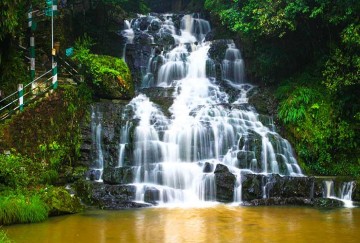
Elephant Falls

Elephant Falls


Elephant Falls, Shillong If you are planning a trip to Meghalaya, Elephant Falls is one place you simply cannot skip. Tucked about 12 km from the heart of Shillong, this three-tiered waterfall is one of the most loved natural attractions in the entire Northeast India. Whether you are a first-time traveller or someone who has visited Shillong before, the falls never fail to leave a mark. What Makes Elephant Falls Special? The waterfall gets its name from the British colonial era, when Englishmen spotted a large rock near the falls that looked like an elephant. That rock was destroyed in the earthquake of 1897, but the name stayed. Locally, the Khasi people call it "Ka Kshaid Lai Pateng Khohsiew," which means "Three-Step Waterfall." The mountain stream descends through three successive falls set in lush, fern-covered rocky surroundings. Each tier has its own personality. The first tier stays hidden among dense vegetation, the second tends to slow down in winter, and the third is the tallest and most dramatic of the three. How to Get There Cabs and local transport are easily available from Shillong city centre to reach the falls. For those flying in, Guwahati Airport is better connected, and from there it is roughly a 3–4 hour scenic road journey to Shillong. Best Time to Visit October to February is widely considered the best time to visit. Post-monsoon, the waterfall is still flowing strong, the greenery is lush, and the weather stays pleasant and clear — ideal for photography and leisurely walks. That said, the monsoon months from June to September bring the falls to their most powerful and thundering best, if you don't mind a little rain. Entry Fee and Practical Tips Entry to the falls costs ?20 per person, with an additional ?20 charge if you want to bring a camera.

Don Bosco Museum


Don Bosco Museum, Shillong – Where Northeast India's Culture Comes Alive If you've ever wanted to understand the soul of Northeast India in a single place, Don Bosco Museum in Shillong, Meghalaya, is that place. Situated within the Sacred Heart Church premises, the museum was set up in 2003 by the Salesians of Don Bosco with the purpose of preserving and promoting the rich, diverse cultures of the northeastern tribes. The museum is a seven-story hexagonal building housing 17 well-laid-out galleries of international standard, spread across approximately 56,000 square feet. Each floor tells a different story — from prehistory and migration to costumes, weaponry, agriculture, and music. The Khasi, Jaintia, and Garo tribes are represented in detail, giving visitors real insight into their traditions, customs, and beliefs. The museum also sheds light on neighboring cultures from Nepal, Bhutan, and Myanmar. What makes Don Bosco Museum stand apart is its hands-on approach. Rather than simply displaying artifacts behind glass, it offers an immersive experience through interactive kiosks, multimedia displays, and vivid fibre-glass figures that bring tribal life to life. Don't miss the top floor — the seventh level features a glass-floored Skywalk offering a breathtaking panoramic view of Shillong and the surrounding hills. Capture A Trip Beyond the galleries, the museum runs the North Eastern Institute for Research in Anthropology (NEIRA) and a library housing over 1,10,000 volumes Telangana Tourism, making it an invaluable resource for students, scholars, and researchers. Whether you're a history enthusiast, a curious traveller, or a student, Don Bosco Museum is one visit you won't forget. It's not just a museum — it's Northeast India's living memory, preserved under one roof.
Don Bosco Museum
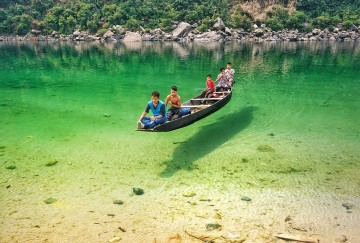
Dawki — The Crystal Clear River

Dawki — The Crystal Clear River


Dawki is one of those places that you see in photographs and assume has been edited. The water of the Umngot River here is so clear that boats appear to be floating on glass rather than water. This is not an exaggeration. I stood at the river bank and could see every single pebble on the riverbed through more than two metres of water. It is, without question, one of the most stunning natural sights in all of India. Dawki is located about 95 kilometres south of Shillong, right on the India-Bangladesh border. The small town itself is mostly a transit point, but the river and the bridge that crosses it have made it world-famous among travellers. The iconic suspension bridge over the Umngot River is one of the most photographed spots in Northeast India, and on a clear morning, the reflections in the water below are extraordinary. Boating on the Umngot River is a must. The boats are small wooden vessels rowed by local boatmen, and as you glide over the transparent water, the effect is genuinely surreal. The best time for boating is between October and March when the water is clearest. During the monsoon, the river swells and the clarity reduces significantly, but the volume of water makes it spectacular in a completely different way. The international border checkpoint at Dawki is one of the busiest land border crossings between India and Bangladesh. On market days (usually Wednesdays), traders from Bangladesh bring goods across and the bridge comes alive with activity. This is a fascinating cultural and commercial exchange to witness if you time your visit correctly. Beyond the river, Dawki is also a gateway to the remote Jaintia Hills region. If you are an adventurous traveller, local guides can take you on day treks through the betel nut groves and into villages where very few tourists venture. The landscape here — flat riverine plains backed by dramatic green cliffs — is unlike anything else in Meghalaya. Best Time for Clear Water: October to April. The water is clearest in January and February. Boating Tip: Negotiate rates before boarding. A shared boat with four passengers is usually around ?500–700 for 30 minutes. Prices vary by season.

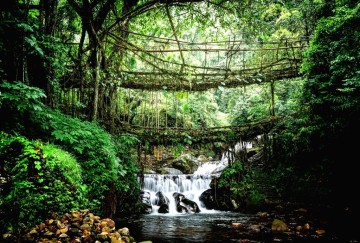
Living Root Bridges of Nongriat — Nature's Architecture


The living root bridges of Meghalaya are, quite simply, one of the most remarkable natural engineering feats in the world. Made by the Khasi people over centuries by training the aerial roots of Ficus elastica (the Indian rubber tree) across streams and rivers, these bridges grow stronger with every passing year. Unlike any man-made structure, they are alive, and they improve with age. I trekked down to the double-decker root bridge at Nongriat and it remains one of the most memorable experiences of my travelling life. The most famous of all the living root bridges is the Double Decker Root Bridge in the village of Nongriat, accessible from Tyrna village near Cherrapunji. The trek down involves approximately 3,000 steps and takes around 2.5 to 3 hours one way. It is steep, uneven, and can be slippery in the rain, but the reward is absolutely worth every step. The bridge itself is a living, breathing structure made of two levels of root bridges layered above each other, surrounded by one of the most lush tropical forest environments you can imagine. The roots of the rubber trees are guided across the river using hollow betel nut trunks as scaffolding. Over 15–20 years, the roots begin to mesh and solidify, creating a bridge that can support dozens of people. The oldest living root bridges in Meghalaya are believed to be over 500 years old. The craftsmanship is passed down through generations, and communities take genuine pride in maintaining these bridges. Nongriat village itself is a beautiful place to spend a night. There are a handful of basic guesthouses run by local families, and the village has a Rainbow Falls nearby — a stunning waterfall with a natural swimming pool at its base. The colours of the spray in afternoon sunlight are genuinely rainbow-like, giving the falls their name. Most day-trekkers miss this entirely because they turn back after the root bridge. Beyond Nongriat, there are numerous other living root bridges scattered across the West Jaintia Hills and East Khasi Hills — many of them completely off the tourist circuit. If you have extra time, hiring a local guide from a village like Pynursla or Mawlynnong can take you to single-root bridges that are just as impressive and far less crowded. Trek Difficulty: Moderate to challenging. Carry trekking poles, wear proper shoes, and start early (6–7 AM) to avoid heat and afternoon rain. Overnight Option: Staying in Nongriat village overnight is highly recommended. Book guesthouses through local contacts or apps like Airbnb.
Living Root Bridges of Nongriat — Nature's Architecture
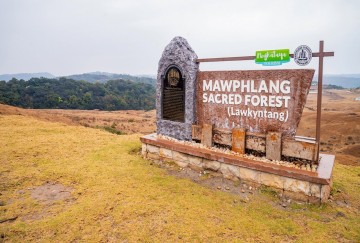
Mawphlang Sacred Forest — Ancient Tribal Sanctuary

Mawphlang Sacred Forest — Ancient Tribal Sanctuary


The Mawphlang Sacred Forest is one of the most spiritually and ecologically significant places in Meghalaya, and arguably one of the most unusual natural attractions in all of India. Located about 25 kilometres from Shillong, this ancient forest has been protected by the Khasi community for centuries through their sacred grove tradition, locally known as law kyntang. Nothing — not a leaf, not a stone, not a twig — may be removed from this forest. The belief is that the forest deity will curse anyone who takes anything from it, and the community has observed this rule with extraordinary discipline. Walking through the Mawphlang Sacred Forest is a profoundly different experience from any other forest in India. There is no logging, no poaching, and no commercial activity. As a result, the biodiversity here is exceptional. Towering oak and rhododendron trees form a dense canopy, mosses and orchids cover every surface, and the forest floor is soft and silent underfoot. The air has a quality to it — cool, clean, and slightly earthy — that is hard to describe but impossible to forget. The forest is home to several rare plant species including some endemic to Meghalaya. Local guides, who are always from the community, lead visitors along designated paths and share the mythological and ecological knowledge of the forest with genuine pride and depth. These guides are not reading from a script — they are passing on knowledge that has been in their families for generations. The experience is educational, atmospheric, and deeply grounding. The Mawphlang monoliths — large standing stones erected to honour ancestors and commemorate significant community events — are scattered around the forest perimeter and add a prehistoric dimension to the visit. These are not tourist-made structures; they are genuine cultural markers that predate British contact with the Khasi people. Each one has a story, and a good guide will tell you the stories with detail and warmth. Entry to the sacred forest requires hiring a local guide, which is mandatory and non-negotiable. This is not a bureaucratic rule — it is a way for the community to ensure the forest is respected and to support the local economy. The guide fees are reasonable, and the knowledge you gain from spending two hours with a good guide is worth far more than the cost. Best Time to Visit: October to April for comfortable walking weather. The forest is beautiful in any season, but trails can be slippery in monsoon. Etiquette: Never touch, move, or take anything from inside the forest. Photography is generally allowed but ask your guide before photographing sacred monoliths.

Umiam Lake (Barapani) — Shillong's Blue Jewel


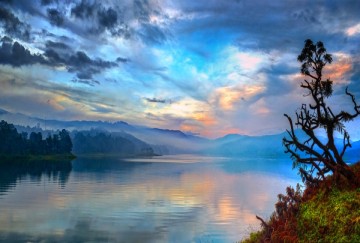
Umiam Lake, popularly known as Barapani, is one of the most scenic spots near Shillong and one of the first natural landmarks you encounter on the road from Guwahati to the state capital. The lake was created in the 1960s when the Umiam River was dammed to generate hydroelectric power, but it has grown into one of the most photographed and beloved landscapes in all of Meghalaya. Spread across approximately 220 square kilometres of shimmering blue water surrounded by pine-forested hills, Barapani is genuinely beautiful in every season. The lakeside drive along National Highway 6 is one of the most scenic stretches of road in Northeast India. The pine trees on one side and the wide expanse of blue water on the other create a picture-postcard quality that makes even a short drive here memorable. Many travellers stop at the various viewpoints along the highway just to sit, breathe the pine-scented air, and take it all in. Water sports at Umiam Lake have grown significantly in recent years. The Meghalaya Adventure Sports and Eco-Tourism Society (MASETS) operates a facility at the lakeside that offers kayaking, water skiing, rowing, and pedal boating. This makes Barapani a great stop for families or younger travellers who want some activity mixed with scenery. The equipment is well maintained and trained staff are on hand to assist beginners. The best views of the lake are from the Orchid Lake Resort viewpoint and from the ridge just above the MASETS camp. In the early morning, the mist sits low over the water and the pine trees are dripping with dew — the kind of scene that makes you reach for your camera immediately. Sunset is equally dramatic, with the sky reflected perfectly in the still water. Barapani is only about 17 kilometres from Shillong city centre, making it an easy half-day trip or a pleasant stop on your way in or out of the city. Several tea stalls and small dhabas along the roadside serve hot chai and local snacks, and there are a few good resort properties around the lake if you want to stay overnight and enjoy the quietness after the day visitors leave. Best Time: All year round, but October to February offers the clearest skies and best photography conditions. Practical Tip: The lake looks most magical in the early morning. Stay nearby the night before and wake up before 7 AM for the best experience.
Umiam Lake (Barapani) — Shillong's Blue Jewel
Jowai and Krang Suri Falls — Hidden Gems of Jaintia Hills

Jowai and Krang Suri Falls — Hidden Gems of Jaintia Hills


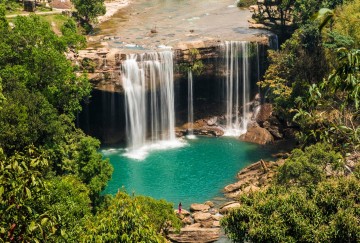
Jowai is the capital of West Jaintia Hills district and one of the most overlooked destinations in Meghalaya. Most visitors stick to the Shillong-Cherrapunji-Dawki triangle and never venture into the Jaintia Hills, which is a real shame because this region has some of the most dramatic landscapes and culturally distinct communities in the entire state. If you are spending more than four or five days in Meghalaya, a detour into the Jaintia Hills is absolutely worth it. Krang Suri Falls, located about 30 kilometres from Jowai, is one of the most strikingly beautiful waterfalls in Meghalaya. Unlike the thundering cascades of Cherrapunji, Krang Suri is a series of tiered falls that drop into a pool of the most impossibly turquoise-green water you will ever see in a natural setting. The colour of the water is caused by the mineral composition of the surrounding limestone, and it is absolutely real — no filter needed. Swimming in the pool at the base of the falls is allowed and is a genuinely joyful experience. The area around Krang Suri is run by the local community with excellent eco-tourism management. There are changing rooms, basic facilities, and local guides available. The trail to the falls from the parking area is short (about 15 minutes) but involves some uneven steps. The entry fee supports the village community directly, and the entire setup is a genuinely positive example of what community-led eco-tourism can achieve in rural Meghalaya. Jowai itself is a pleasant hill town with a distinct Pnar (Jaintia) cultural identity that differs noticeably from the Khasi culture of Shillong. The weekly market, the local cuisine (try pukhlein — deep-fried rice and jaggery cakes), and the old colonial-era buildings give the town a character all its own. The Ïewduh Jowai bazaar on market days is lively and colourful, and the local people are exceptionally warm and welcoming to visitors who take the time to explore properly. The Jaintia Hills are also home to some of Meghalaya's least explored cave systems, including the Krem Syndai caves and the Krem Mawmluh caves that connect to the border region. Caving expeditions in this area are available through registered adventure tour operators in Shillong, and the experience is absolutely world-class for adventurers who do not mind getting wet and muddy in pursuit of extraordinary underground landscapes. Getting There: Jowai is about 65 km from Shillong via NH 6. Regular buses and shared taxis operate from Bara Bazaar in Shillong. Combine With: Nartiang Village, which has the largest collection of Jaintia monoliths in Meghalaya, is just 25 km from Jowai and makes a fascinating add-on.

Tura and the Nokrek Biosphere Reserve — Wild Garo Hills


Tura is the largest town in the Garo Hills region and the entry point for some of the most wild and unspoiled natural landscapes in Meghalaya. While the town itself is a busy commercial hub, it serves as the perfect base for exploring the Nokrek National Park and Biosphere Reserve, which lies about 55 kilometres to the northeast. The Nokrek region is of global ecological importance — it was designated a UNESCO Biosphere Reserve in 2009 — and it is home to one of the last wild populations of the ancestor of all cultivated citrus fruits. The Nokrek Biosphere Reserve covers an area of approximately 820 square kilometres and includes a core zone where entry is strictly restricted and a buffer zone open to eco-tourists with permits. The landscape is a mixture of dense tropical forest, grasslands, and rocky ridges. Elephants, clouded leopards, hoolock gibbons, and large cats move through these forests, and on overnight treks, the sounds of the forest at night are extraordinary. This is proper, unpolished wilderness — not a manicured national park experience. The Garo Hills region has a very different cultural feel from the Khasi Hills. The Garo people are matrilineal like the Khasi, but their language, architecture, festivals, and cuisine are distinct. The traditional Garo long house (nokpante), the wangala harvest festival celebrated in October/November, and the locally brewed rice beer (chubitchi) are all cultural experiences worth seeking out during your time in this region. Tura Peak, just above the town itself, offers a short and accessible trek that rewards you with a panoramic view of the Garo Hills and the plains of Assam and Bangladesh below. The trek takes about two to three hours return from the base and passes through pleasant forest with good birdwatching opportunities. This is a good option for those who want some physical activity without committing to a full multi-day trek in the Nokrek interior. For those interested in sustainable and off-beat travel, the Garo Hills region genuinely rewards patience and curiosity. The infrastructure is less developed than the Khasi Hills, which means fewer tourists but also fewer amenities. Go with an open mind, a good local guide, and a willingness to eat what the local community eats — and you will come away with memories and experiences that polished tourist circuits simply cannot provide. Getting to Tura: Tura has a small airport with limited flights from Guwahati. The road journey from Guwahati takes approximately 7–8 hours but passes through beautiful scenery. Best Season: October to March for trekking and wildlife. The Wangala festival (November) is an exceptional time to visit for cultural immersion.
Tura and the Nokrek Biosphere Reserve — Wild Garo Hills
Laitlum and Smit: Meghalaya's Hidden Gem Worth Every Step

Laitlum and Smit: Meghalaya's Hidden Gem Worth Every Step


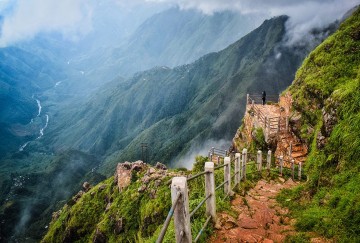
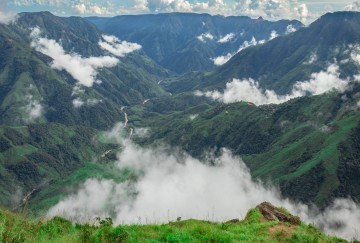
Perched on the edge of the Khasi Hills, lies a hidden paradise that offers a glimpse into the soul of the state. The two beautiful villages of Laitlum and Smit, located at a distance of about 15.8 kms in the East Khasi Hills district of Meghalaya, are nothing short of a natural wonder. Laitlum, meaning "end of hills," is a mesmerising hilltop that offers panoramic views of the surrounding valleys and gorges. Smit, on the other hand, is a quaint village that is steeped in history and culture, with ancient monoliths and sacred sites that tell the story of Meghalaya's rich heritage. Together, these two destinations offer a journey into the mystical heart of Meghalaya, where nature's beauty and human history intertwine in a mesmerising tapestry. Laitlum and Smit are not just destinations; they are experiences, journeys into the heart and soul of Meghalaya. Whether you're exploring the stunning landscapes of Laitlum or delving into the history and culture of Smit, these two destinations offer a glimpse into the mystical heart of Meghalaya, where nature's beauty and human history intertwine in a mesmerising tapestry. Come, discover the beauty of Laitlum and Smit, and let the magic of Meghalaya's mystical heart captivate your soul.

Ward's Lake - A lovely man-made lake right in the heart of the city.


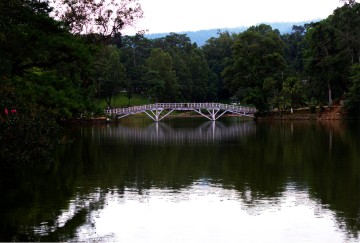
The legacy of the former Chief Commissioner In the heart of Shillong lies an enchanting artificial lake called Ward’s Lake. It was meticulously planned by William Ward, the chief commissioner of Undivided Assam, and brought to life by the skilled hands of Colonel Hopkins in 1894. What sets this 100-year-old lake apart is its unique horseshoe shape and the lush botanical garden that surrounds it, boasting a mesmerising array of endangered plants and trees. A graceful wooden bridge adds to its allure, elegantly spanning the crystal-clear waters of the lake. Legend has it that the captivating lake has a fascinating history - it is said to have been constructed by a Khasi prisoner who sought work to escape his cell. His initial efforts inspired the administrators to create the breath-taking landscape around it. The locals affectionately refer to this gem as Nan Polok or Polok Lake.
Ward's Lake - A lovely man-made lake right in the heart of the city.
Nohsngithiang Falls or Mawsmai Falls or  Seven Sisters Falls

Nohsngithiang Falls or Mawsmai Falls or Seven Sisters Falls


The tallest plunge waterfall in India at around 340 metres. The view from the top is absolutely breathtaking. Do not miss the turquoise green pool at the bottom. In the heart of Meghalaya, a state renowned for its mesmerising natural beauty and enigmatic charm, lies a hidden gem that beckons adventurers and nature enthusiasts alike. Nohsngithiang Falls, also known as the Seven Sisters Falls or Mawsmai Falls, is a beautiful spectacle showcasing nature's raw power and majesty. The name "Seven Sisters Falls" is steeped in local legend, adding a layer of mystique to the already enchanting atmosphere. According to folklore, the waterfall was named after seven sisters whom a single suitor once wooed. In a fit of jealousy, the sisters are said to have transformed into the seven streams cascading down the cliff face, forever frozen in their emotional turmoil. As you gaze upon the falls, you can almost hear the whispers of this tragic tale carried on the mist that rises from the churning waters below. The water, fed by the abundant rainfall that blesses Meghalaya, plunges from a height of over 1,000 feet, creating a thunderous roar that echoes through the surrounding hills. The force of the falling water sends up a fine mist that catches the sunlight, creating a dazzling rainbow that arches across the base of the falls, a fleeting reminder of the transient nature of beauty.

Eco Park Cherrapunji


The wonders of a delicate ecosystem Nestled amidst the lush hills of Meghalaya, India, Eco Park in Cherrapunjee captivates visitors with its verdant beauty and conservation ethos. Established in 2004, this park sprawls across acres of land, offering a serene retreat amidst nature’s bounty. Designed and maintained by the Government of Meghalaya, Eco Park stands as a testament to sustainable tourism. Its purpose is to allow visitors to appreciate the natural wonders of the region while preserving its delicate ecosystem. Behold the breathtaking views of nature Eco Park provides panoramic vistas of the ‘Green Canyons’ of Cherrapunjee. These lush valleys, cloaked in emerald green, stretch out before you, creating a mesmerising sight. The park showcases Meghalaya’s rich biodiversity. The rare plant species and indigenous wildlife thriving in this haven make for a treat for nature enthusiasts and birdwatchers. Within its boundaries, Eco Park boasts a crystal-clear water stream. The gentle flow of water adds to the tranquility of the surroundings.
Eco Park Cherrapunji
Mawmluh cave

Mawmluh cave


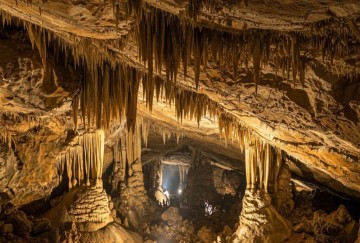
The Indian golden spike Located 4503 meters above sea level in Meghalya's Cheerapunjee, the Mawmluh cave is more than just a shelter. It is a geological marvel and earth's most beautiful creation. This 7.2 km long maze cave is the 4th largest cave in India. The cave which has various entrances has formed its Junction at an Eocene dolomite which is a geological time-defining epoch that is longer than a stage and shorter than a period. This Eocene dolomite found in Mawmluh is said to be the one that lasted from 56 to 33.9 million years ago. The junction of the cave is crafted between Eocene dolomite and sandstone defining its criteria of being a GSSP or a golden spike that shows the transition between the two geological periods and helps geologists all around the world. With sandstone and Eocene dolomite formation, the cave is also filled with stalactites and stalagmites which are the dripping stone structures in caves that accumulate over time as the cave ages. These stalagmite accumulations adorn the cave and have been doing that over the ages, they add to the raw beauty of the cave and one can see how the earth has aged over the period for which it has survived. A mark of history and legacy The cave comes under the top 100 geological sites that were selected from 56 countries by the United Nations Educational, Scientific and Cultural Organisation (UNESCO) and now is an official International Union of Geological Sciences (IUGS) site as it is made out of the competition from many other sites. The cave's stalagmite structures were the ones which eventually suggested its extremely long existence and also helped in determining that after the ice age around 4200 years ago, there was a 200-year-long drought that ended up destroying the civilizations but the cave stood still and survived as evidence of it. This cave has a pool inside, formed by the culmination of five rivers, one-fourth of whose part is exposed to the sun. It is indeed an age-old marvel which now comes under the ‘First hundred IUGS geological sites in the world.’ It was a British officer Lieutenant Yule who found the cave in 1844 as he discovered India for treasures and active administration. Yule found the cave and little did he know in search of gold he had found a geological wonder of all time, and he should be thanked immensely for this huge discovery which is a legacy of not a country bit of the whole Earth. The cave has its own stories associated with the Khasi tribe. Kreh is the word for a cave, and Mawmluh comes from a hamlet named after the cave. Some stories say that the cave is a safe shelter for spirits and elders of the tribe who also protect the cave while others believe that the cave has some sort of hidden treasure in it, eventually making it an important aspect for the tribe where they also worship and celebrate the spirits. And also celebrate this glorious creation of Mother Earth.

Shilong Peak


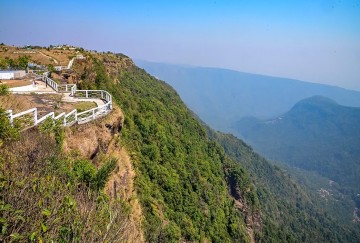
The majestic heights Perched at an impressive altitude of 6,449 feet (1,965 meters) above sea level, the Shillong Peak reigns supreme as the epitome of the city's grandeur. For generations, it has been an intrinsic part of the cultural and spiritual heritage of the Khasi and Jaintia tribes, revered as a sacred place where tribal rituals and ceremonies are performed. Its regal presence is a testament to the deep-rooted connection between the people and the land, evoking a sense of reverence and awe. Legends carved in time Shillong Peak adds an air of magic and mystique to an already captivating destination. Rumours swirling from past reveal that its name comes from this towering presence in local folklore; weaving tales to capture imaginations and inspire spirits alike. Leishyllong, the patron deity, is thought to reside upon these hills as an eternal protector, shielding it from harm and instilling peace among its residents. Belief in her presence brings a sense of divine protection and tranquillity among its citizens. Every spring, an elaborate religious ceremony takes place atop a peak, imbuing this holy space with spiritual meaning and uniting community members through expression of faith and gratitude. Treasures of culture Unleash Shillong's vibrant cultural legacy through indigenous crafts. Crafted with care from locally sourced materials such as basket weaving or pottery making to textiles and jewellery making, each intricate handcrafted creation bears the distinctive imprint of skilled artisans who give each one life. Each piece stands as a tangible reminder of Shillong's artistic legacy while making for a wonderful souvenir to take home with you. Spices of flavour Treat yourself to the aromatic flavours of Meghalaya by taking home packs of locally grown and processed spices from the state’s culinary traditions - black pepper, cardamom, cinnamon and turmeric being just a few of them. Bring home these aromatic treasures to enrich your own culinary endeavours long after leaving Meghalaya behind. Flavours of the land Taste the regional flavours by purchasing locally produced jams, pickles, and condiments made from delicious fruits and vegetables grown on Meghalaya's fertile land. These delectable treats allow you to experience Meghalaya's culinary traditions even long after leaving its shores. Nature's bounty Immerse yourself in the abundance of the land by purchasing natural products that encapsulate its lush beauty. Discover jars of golden honey, fragrant teas and aromatic herbs grown and produced within Meghalaya - these treasures of nature provide a taste of its beautiful landscapes while connecting you with its abundant offerings. As you ascend Shillong Peak, prepare to be mesmerised by its rich heritage and stunning beauty. Be swept away by legends and stories that weave themselves into this remarkable destination's fabric. Let the majestic views etch themselves into your heart, forever remembering your journey up this pinnacle of grandeur. Journeys beyond Don Bosco Centre for Indigenous Cultures: Delve into history, arts, and crafts at this captivating museum. Dedicated to preserving and celebrating cultural traditions within its region's borders. Phan Nonglait Park: Find tranquillity in Shillong's Laban area by relaxing in this peaceful park named after its first lady - Phan Nonglait. Amidst lush greenery and blooming flowers, Phan Nonglait provides an idyllic respite from city life. Ward's Lake: Take in the beauty and serenity of this artificial lake surrounded by an exquisite garden, perfect for picnicking and boating. Enjoy peaceful moments amidst nature's splendour at Ward's Lake!
Shilong Peak
Nongsawlia Presbyterian Church

Nongsawlia Presbyterian Church


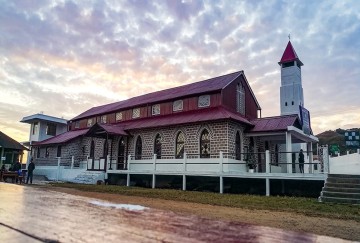
Take in the ethereal views Nongsawlia Presbyterian Church, the oldest church in Meghalaya, is nestled on the lush hills of Cherrapunjee. The panoramic view is an inherent part of the church’s experience. The sacred and scenic beauty, where ethnic charm fuses with mystic grandeur creates a tranquil atmosphere for its visitors. Once you step into this place, your eyes will be welcomed by the greenery stretching out before you. The branches of the tall Khasi pine trees waver gently against the winds, filling the crisp air with their sweet scent. Sunlight filters through the trees, creating intricate patterns on the church’s roof. During the rainy season, the pitter-patter of rain against the church’s roof, the melody from the birds and the presence of faith will evoke feelings of serenity and calmness. The traditional Khasi houses in the backdrop, add a touch of cultural heritage to the view. Experience all the beautiful aspects of this place; Inhale the fresh air infused with the smell of sweet pines and wet earth, listen to the birds chirping, watch the clouds dance in the sky, and hear the leaves slowly crushing underneath your slow steps. These sensory experiences will evoke a sense of homely retreat in you. The Nongsawlia Presbyterian Church, with its tranquil and mesmerising beauty, offers a homely retreat for its visitors seeking solace and spiritual peace. A monument of devotion and faith The Church was first established in the year 1846 by Welch Missionary Thomas Jones, who travelled to the Khasi village to preach the Christian faith. Thomas Jones devoted himself to learning the Khasi language and within eight months, he was able to effectively converse and preach the gospel in Khasi. His success earned him the title ‘Father of the Khasi Alphabets’ and ‘The Founder of Khasi Literature.’ A fusion of culture and belief The Nongsawlia Presbyterian Church symbolised a harmonious fusion between the indigenous Khasi heritage and Christian Faith, promoting peace between the two realms. In addition to his missionary work, Thomas Jones established a school near the church, fostering educational awareness among the Khasi tribe and supporting their culture. This Educational institution played a major role in the social advancements in the Khasi region, representing the church’s impact beyond religious belief.

Explore these must-visit sightseeing places in Meghalaya and immerse yourself in the natural beauty and cultural heritage of this hill station.

×

Request a Call Back

Share your details and our travel expert will call you shortly.